
Window light is your best friend
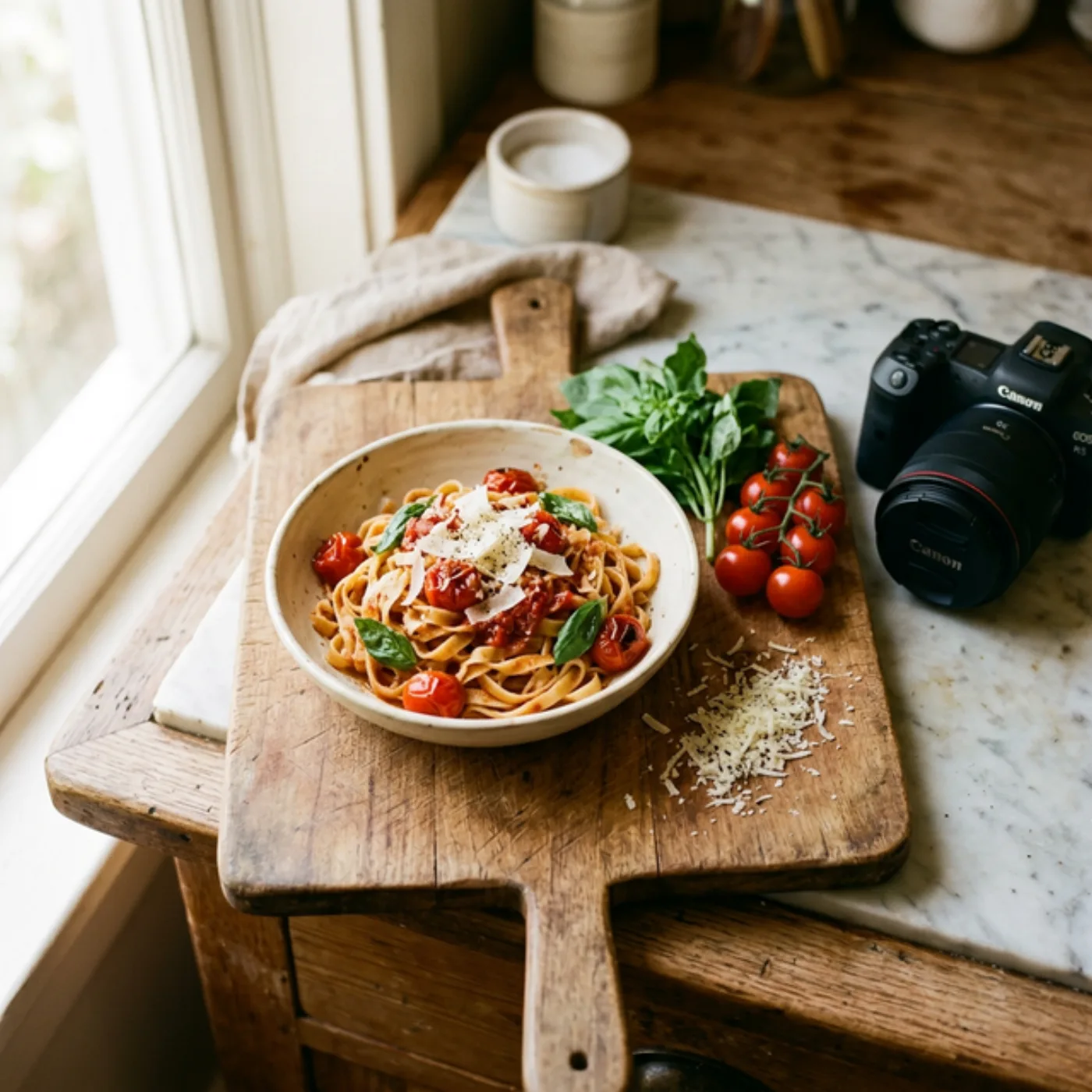
Natural window light creates soft, even illumination that makes food look appetizing. Position the dish at 45° to the window. A white reflector on the opposite side fills shadows.
Food photography lives and dies by color accuracy, sharp detail, and light control. The right camera helps — but the winning combination is predictable color, sharp lenses, and a fast workflow for social and client delivery.
| Model | Sensor | Best For | Resolution | Price |
|---|---|---|---|---|
| Fujifilm X-T5 | APS-C | Best Color | 40.2MP | ~$1,699 |
| Sony A7 IV | Full-Frame | Hybrid Pro | 33MP | ~$2,498 |
| Canon EOS R8 | Full-Frame | Natural Color | 24.2MP | ~$1,499 |
| Sony A7C II | Full-Frame | Compact FF | 33MP | ~$2,198 |
| Canon EOS R50 | APS-C | Starter Value | 24.2MP | ~$679 |
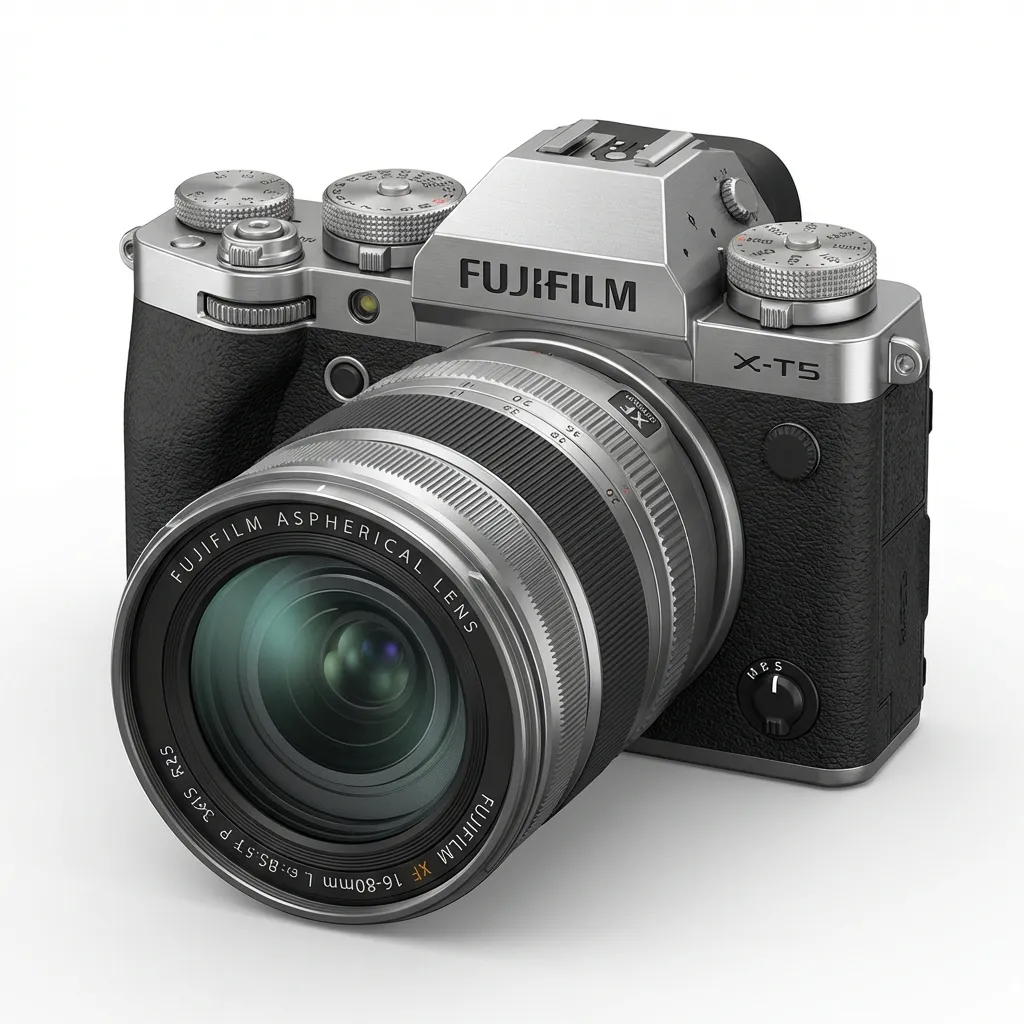
Fujifilm's film simulations are the secret weapon for food creators. Velvia makes warm dishes pop with saturated reds and oranges, Classic Chrome adds elegant moodiness to café scenes, and PRO Neg Std gives you clean, neutral tones for client work. All straight out of camera.
The 40.2MP sensor resolves incredible detail — every grain of salt, every sauce drip. Pair it with the XF 56mm f/1.2 for shallow depth-of-field food portraits, or the XF 60mm f/2.4 Macro for close-up texture shots.
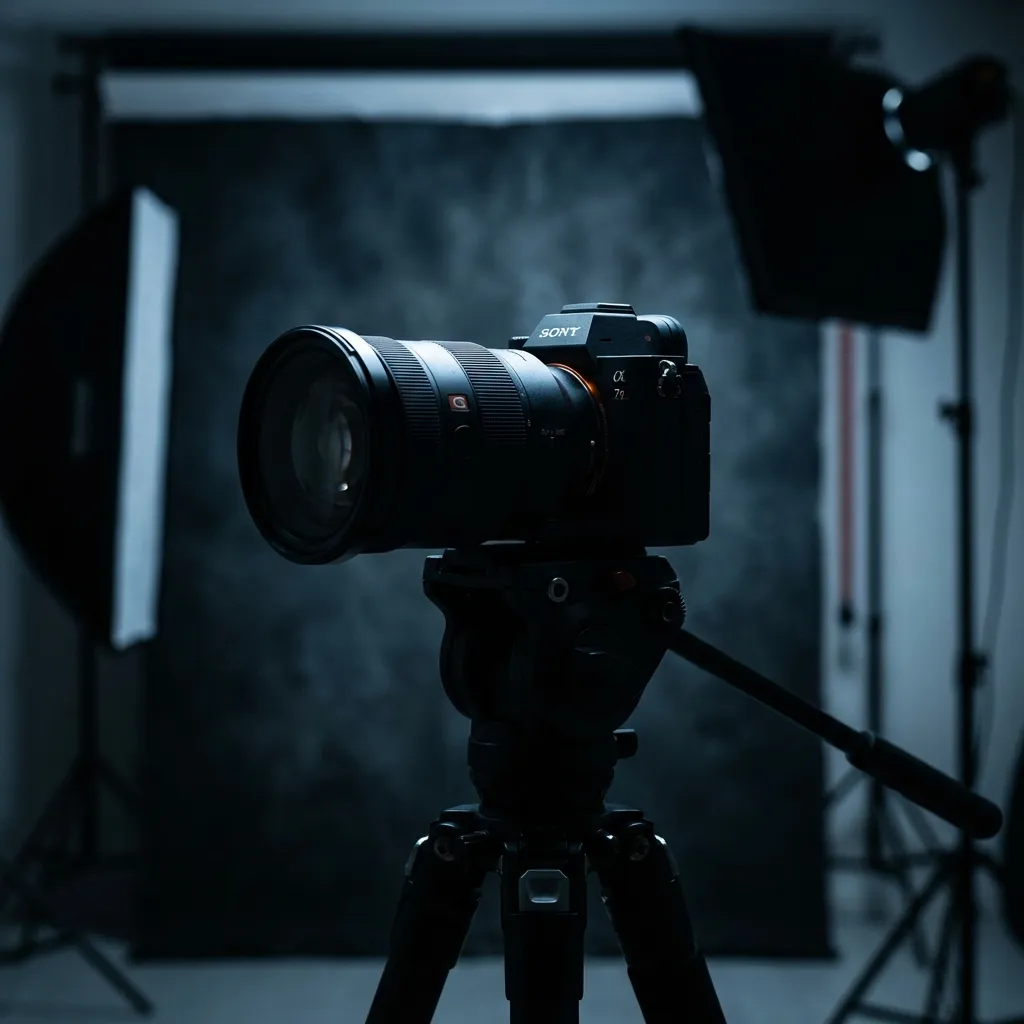
If you shoot both stills and video for food clients, the A7 IV does both exceptionally. The 33MP full-frame sensor delivers wide dynamic range for tricky restaurant lighting, and the 4K60 video mode captures cinematic recipe content.
The E-mount ecosystem offers outstanding macro options: the Sony FE 90mm f/2.8 Macro is one of the sharpest lenses ever made, and the Tamron 35mm f/2.8 is perfect for overhead flatlay work.
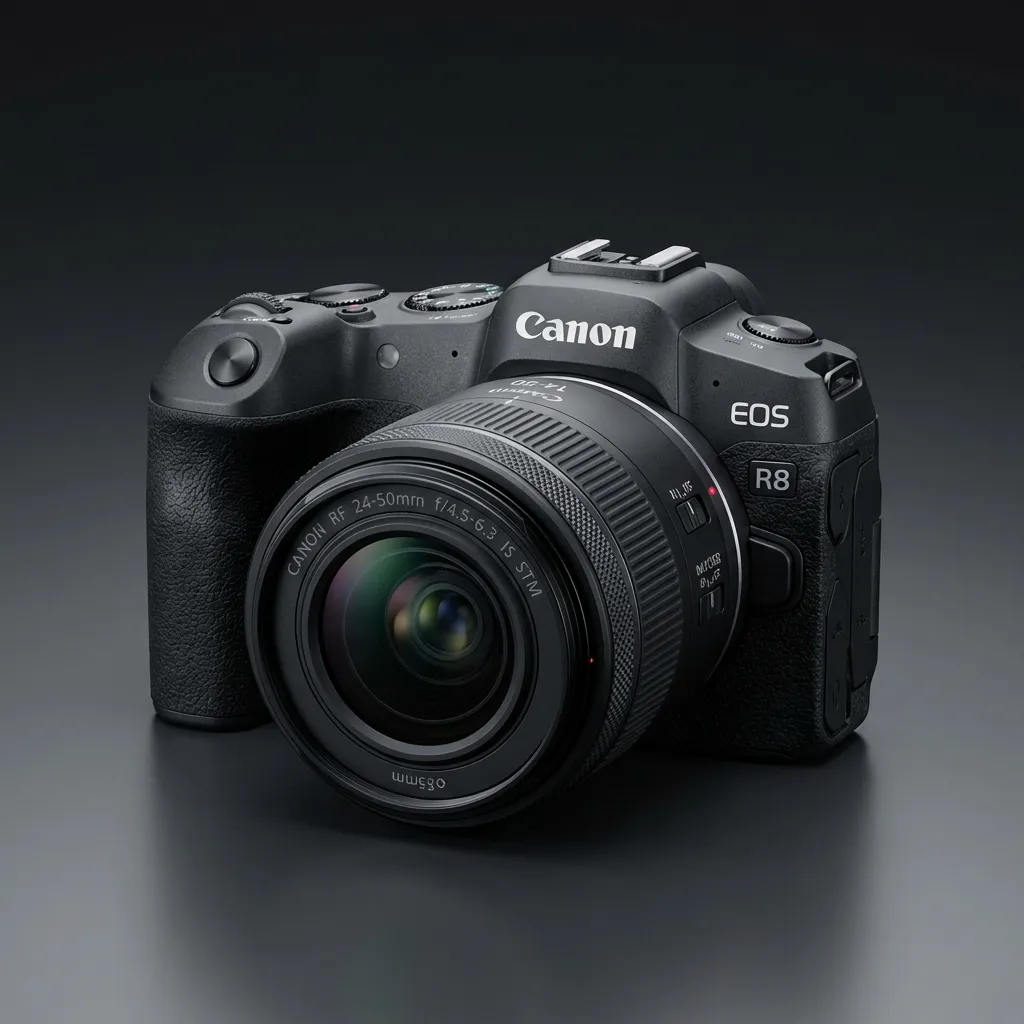
Canon's color science is naturally warm and pleasing — food looks appetizing straight out of camera with minimal editing. The R8 gives you full-frame quality at a price that makes sense for food bloggers and small restaurant clients.
The RF 35mm f/1.8 IS Macro is a dream pairing: it handles both flatlay shots and close-up texture work with built-in IS. Lightweight body means you can shoot overhead handheld without fatigue.
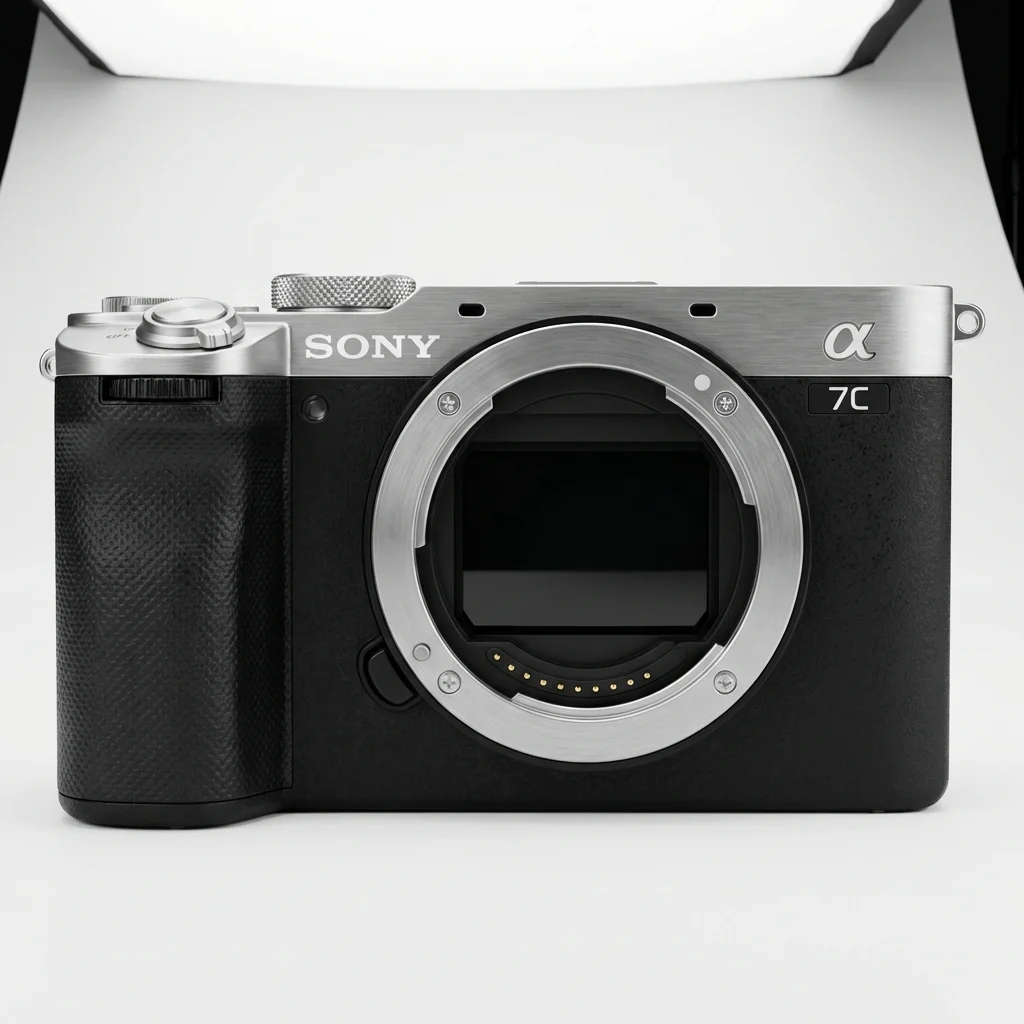
Same 33MP sensor as the A7 IV but in a rangefinder-style body that's easier to bring to restaurant visits and farmers markets. The compact form factor means you're less conspicuous shooting in working kitchens and dining rooms.
AI autofocus tracks subjects instantly, and IBIS provides stability for available-light shooting without a tripod. Perfect for food creators who need full-frame quality in a pocketable package.
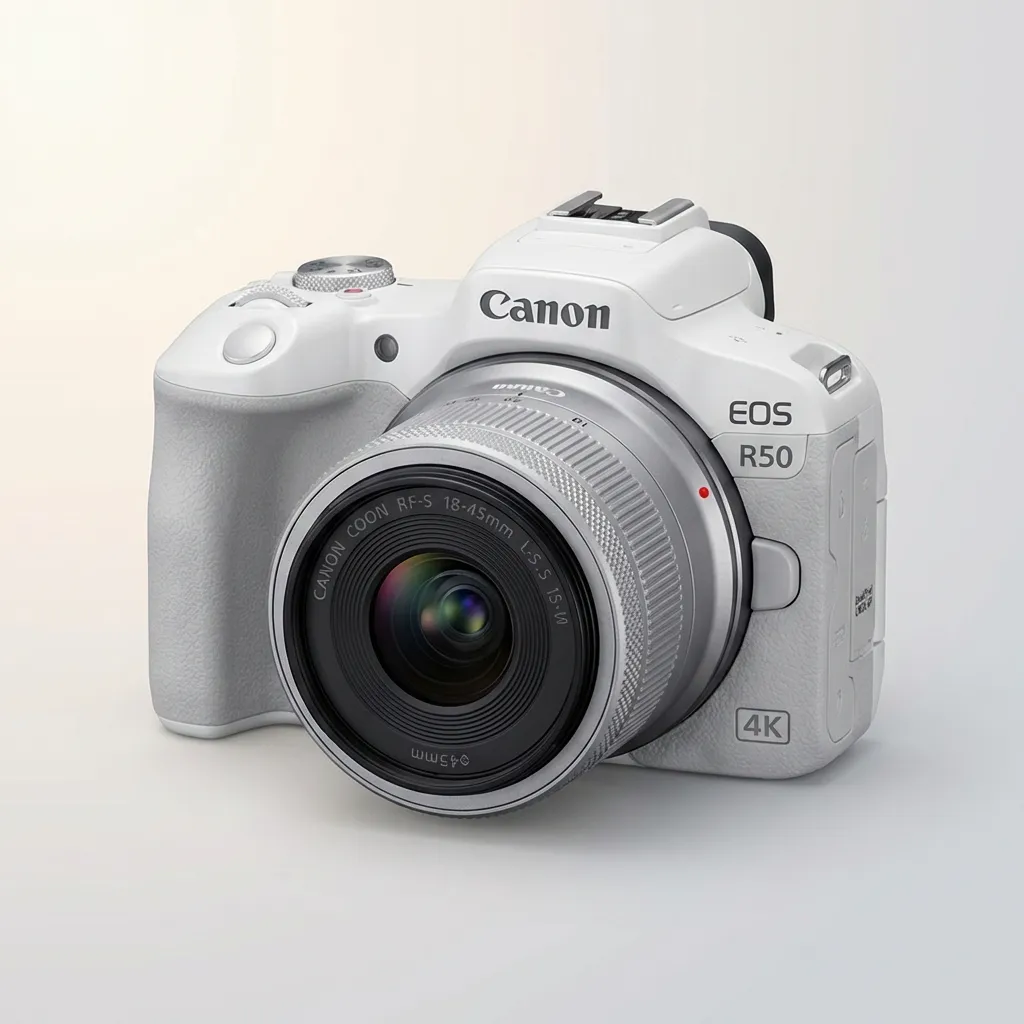
For food bloggers and social media creators starting out, the R50 delivers Canon's pleasing color science at under $700. The RF-S 18-45mm kit lens handles general shots, and adding the RF-S 55-210mm or an affordable manual macro lens opens up creative options.
Auto mode produces clean, well-exposed images for Instagram and blog posts with minimal editing. The compact size makes it easy to bring to restaurants and shoot one-handed.
Natural window light creates soft, even illumination that makes food look appetizing. Position the dish at 45° to the window. A white reflector on the opposite side fills shadows.
Wide-open apertures make food blurry. Stopping down to f/4-5.6 keeps the entire plate sharp while still blurring the background nicely.
Garnishes, textured backgrounds, and props tell a story. A well-composed phone photo beats a badly-composed $3,000 camera shot every time.
A camera with strong color science, good dynamic range, and access to sharp prime lenses (35mm, 50mm, macro) is ideal. Fujifilm's film simulations and Canon's natural color rendering are particularly well-suited.
Not necessarily. APS-C cameras like the Fujifilm X-T5 can deliver excellent food images. Lighting, lens quality, and composition usually matter more than sensor size for food work.
A 50mm equivalent prime is the most versatile everyday choice. A 90-105mm macro lens adds critical close-up detail for plating and texture shots. A 35mm works for overhead flatlays.
Lighting matters far more than camera body choice. A $500 camera with good window light or a simple LED panel will outperform a $3,000 camera in poor lighting. Master natural light first.

We test cameras with real-world food content scenarios: restaurant lighting, flatlay framing, and color accuracy for social media delivery.
Learn more about our testing process →We buy or rent our own equipment. No manufacturer paid for this guide. We earn a commission when you use our affiliate links, which keeps this site ad-free.