
OM System OM-5 Mark II Review
A 20.4 MP Micro Four Thirds body with 121 cross-type phase-detection AF points, 4K 30p video and 5-axis sensor-shift stabilisation rated up to 6.5 stops (7.5 with Sync IS), at 418 g with battery and card. OM System's product page states IP53 weather sealing. Sensor, autofocus, burst, video and CIPA battery figures on its spec page match the OM-5's.

Disclosure: As an Amazon Associate I earn from qualifying purchases. Links marked * are affiliate links. Details
Links to retailers on this page are affiliate links. We earn a commission on purchases made through them, at no extra cost to you. It doesn't change our verdicts.
The Verdict
20.4 effective megapixels on a 17.3 × 13.0 mm Four Thirds Live MOS sensor with the TruePic IX processor, in a body of 418 g with battery and memory card (366 g body only). OM System rates the 5-axis sensor-shift stabilisation at up to 6.5 EV steps, or up to 7.5 with Sync IS, based on CIPA measurement conditions. Autofocus combines 121 phase-detection points, all cross-type, with 121-point contrast detection and face and eye detection. The product page states IP53-certified weather sealing; the spec table lists freezeproofing to −10 °C.
Video stops at 4K 30p and C4K 24p in H.264, with Full HD at 120 fps for high-speed recording. The fastest burst is approx. 30 fps in silent mode with the electronic shutter, for 18 RAW frames; OM System's product page gives 30 fps with S-AF and 10 fps with C-AF. The battery is rated at 310 shots to CIPA. Against the OM-5's spec page, the Mark II's lists 4 g more weight, two added picture modes (OM-Cinema1 and OM-Cinema2), a USB 3 Type-C line and a third colour, Sand Beige.
- Overall
- 7.4/10
- Image quality
- 7.2
- Autofocus
- 6.8
- Video
- 7.0
- Speed
- 8.0
- Handling and build
- 8.2
What Stands Out
- IP53-certified weather sealing per OM System's product page; freezeproof to −10 °C per the spec table
- 5-axis sensor-shift stabilisation, up to 6.5 EV steps, 7.5 with Sync IS (CIPA measurement conditions)
- 418 g with battery and memory card, 366 g body only
- 121 phase-detection points, all cross-type, with eye detection and Starry Sky AF
- High Res Shot: 50 MP-equivalent JPEG handheld, 80 MP-equivalent on a tripod, from 8 sensor-shifted frames
- Pro Capture with up to 14 pre-shutter frames, and Live ND from ND2 to ND16
- OM-Log400 plus OM-Cinema1 and OM-Cinema2 picture modes, and a 3.5 mm microphone jack
- The battery charges in the camera over USB while the camera is off
Trade-offs
- 4K tops out at 30p and C4K at 24p; no 4K60
- OM System states no internal video bit depth; HDMI output is YCbCr 4:2:2, 8-bit
- 30 fps only in silent mode with S-AF, for 18 RAW frames; 10 fps with C-AF
- Approx. 310 shots per charge to CIPA
- The interface list names a microphone jack but no headphone jack; HDMI is the micro connector (Type D)
- Sensor, AF, burst, video and CIPA battery figures are the same as on the OM-5's spec page
| Sensor | 4/3-inch Live MOS, 17.3 × 13.0 mm (4:3), 20.4MP effective, 21.8MP total |
|---|---|
| Processor | TruePic IX |
| Resolution | 5,184 × 3,888 (4:3); 12-bit RAW and JPEG |
| High Res Shot | Tripod: JPEG equivalent to 80 / 50 / 25MP, RAW 10,368 × 7,776. Handheld: JPEG equivalent to 50 / 25MP, RAW 8,160 × 6,120. 8 shots combined using sensor shift |
| Lens mount | Micro Four Thirds |
| Stabilisation | Sensor shift, 5-axis: up to 6.5 EV steps, up to 7.5 EV steps with Sync IS (CIPA measurement conditions). OM System does not name the lens used for the rating |
| Autofocus | Phase detection, 121 points, all cross-type; contrast detection, 121 points. Eye detection (left, right or near side priority), tracking, Starry Sky AF |
| Continuous shooting | Sequential H approx. 10 fps (149 RAW frames). Silent mode (electronic shutter): H approx. 30 fps (18 RAW / 20 JPEG), L approx. 10 fps (138 RAW). Pro Capture: approx. 30 / 10 fps with 0–14 pre-shutter frames. Rated with a KIOXIA KSDXU-A064G card and the M.Zuiko 12-40mm F2.8 PRO |
| Shutter speeds | Focal-plane shutter 1/8,000–60 s; silent mode (electronic) 1/32,000–60 s; bulb up to 30 minutes; flash sync 1/250 s |
| ISO | LOW–25,600 (auto default LOW–6,400) |
| Video | C4K 4,096 × 2,160 at 24p (IPB, approx. 237 Mbps); 4K 3,840 × 2,160 at 30p/25p/24p (IPB, approx. 102 Mbps); Full HD to 60p; Full HD 120 fps high-speed. MOV (H.264). Maximum recording time listed as up to card capacity, maximum file size 4 GB |
| Picture modes | Flat, OM-Log400, OM-Cinema1, OM-Cinema2 |
| Audio | Built-in stereo microphones; 3.5 mm microphone jack; linear PCM up to 24-bit / 96 kHz |
| Viewfinder | OLED, 2.36M dots, up to 1.37x (50 mm lens, infinity, −1 dioptre, depending on viewfinder style), approx. 100% coverage, 27 mm eye point |
| Rear screen | 3.0-inch (7.6 cm) vari-angle touch LCD, 3:2, 1,037k dots |
| Weather sealing | IP53 per OM System's product page; the spec table lists freezeproof to −10 °C |
| Storage | SD / SDHC / SDXC, UHS-I and UHS-II; OM System recommends UHS-II or UHS-I U3 for 4K, C4K and ALL-I |
| Battery | BLS-50: 310 shots (CIPA, IS on, no flash); OM System gives one figure, not separate viewfinder and screen figures. USB charging in the camera when it is off |
| Connections | Micro HDMI (Type D); USB Type-C (listed as USB 2.0 High Speed and USB 3 Type C); 3.5 mm microphone jack; hot shoe; Wi-Fi; Bluetooth Low Energy 4.2 |
| Dimensions | 125.3 × 85.2 × 49.7 mm (W × H × D) |
| Weight | 418 g with battery and memory card |
| Body only | 366 g |
| Operating temperature | −10 to 40 °C |
| Colours | Black, Silver, Sand Beige |
Maker-published figures, with source and date: Numbers & Sources below.
In Depth
Sensor and resolution modes
OM System lists a 4/3-inch Live MOS sensor of 17.3 × 13.0 mm with 20.4 effective megapixels (21.8 total), read by the TruePic IX processor. Standard files are 5,184 × 3,888 pixels in 4:3, with RAW recorded at 12 bits.
High Res Shot combines 8 frames taken with sensor shift. On a tripod it outputs JPEGs equivalent to 80, 50 or 25 megapixels and RAW at 10,368 × 7,776; handheld it outputs JPEGs equivalent to 50 or 25 megapixels and RAW at 8,160 × 6,120. Both modes use the electronic shutter.
Stabilisation and weather sealing
The sensor-shift stabiliser works on five axes. OM System rates it at up to 6.5 EV steps with the body alone and up to 7.5 EV steps with Sync IS, based on CIPA measurement conditions; the spec page does not name the lens used. Movie mode adds M-IS1 (sensor shift plus electronic stabilisation) and M-IS2 (sensor shift only).
The product page states IP53-certified weather sealing against dust, rain and cold. The spec table's Tough Features section lists freezeproofing to −10 °C, and the operating range is −10 to 40 °C.
Autofocus and burst
Autofocus combines TTL phase detection on 121 points, all of them cross-type, with 121-point contrast detection. Eye detection can prioritise the left, right or nearer eye, and the modes include tracking, focus stacking with 8 shots, focus bracketing from 3 to 999 shots, and Starry Sky AF.
In standard sequential mode the H setting is approx. 10 fps, for 149 RAW frames. Silent mode, which uses the electronic shutter, runs at approx. 30 fps for 18 RAW or 20 JPEG frames, or approx. 10 fps for 138 RAW frames. The product page ties 30 fps to S-AF and 10 fps to C-AF. Pro Capture records up to 14 frames from the half-press before the full press. OM System rates these speeds with a KIOXIA KSDXU-A064G card and the M.Zuiko 12-40mm F2.8 PRO, and notes that the actual speed can fall a few frames per second below the setting.
Video and audio
Video is recorded as MOV in H.264: C4K 4,096 × 2,160 at 24p at approx. 237 Mbps, 4K 3,840 × 2,160 at 30p, 25p or 24p at approx. 102 Mbps, Full HD to 60p, and Full HD at 120 fps as high-speed recording. Picture modes for video are Flat, OM-Log400, OM-Cinema1 and OM-Cinema2. OM System gives no internal bit depth; over HDMI the output is YCbCr 4:2:2 at 8 bits. The listed maximum recording time is up to card capacity, with a maximum file size of 4 GB.
Sound comes from built-in stereo microphones or the 3.5 mm microphone jack, in linear PCM up to 24-bit / 96 kHz. The interface list shows no headphone jack.
Shutter, computational modes and controls
The focal-plane shutter runs from 1/8,000 s to 60 s, silent mode from 1/32,000 s to 60 s, and bulb up to 30 minutes. Flash sync is 1/250 s, or 1/8,000 s in Super FP mode. OM System's product page lists Live ND from ND2 to ND16, Live Composite and Night Vision Mode, and a Computational Photography button for High Res Shot, Live ND, focus stacking, HDR and multiple exposure.
The OLED viewfinder has 2.36M dots and up to 1.37x magnification; the 3.0-inch vari-angle touch screen has 1,037k dots.
Battery, card and connections
The BLS-50 battery is rated at 310 shots to CIPA, with stabilisation on and no flash. It charges in the camera over USB while the camera is switched off. The camera takes SD, SDHC and SDXC cards to UHS-I or UHS-II, and OM System recommends UHS-II or UHS-I U3 cards for 4K, C4K and ALL-I recording. Connections are micro HDMI (Type D), USB Type-C, a microphone jack, a hot shoe, Wi-Fi and Bluetooth Low Energy 4.2.
Sample photos from other photographers
Photos that other people took with the OM System OM-5 Mark II and published on Wikimedia Commons under free licences. We chose them; we did not take them. The settings under each photo come from the file's own metadata.
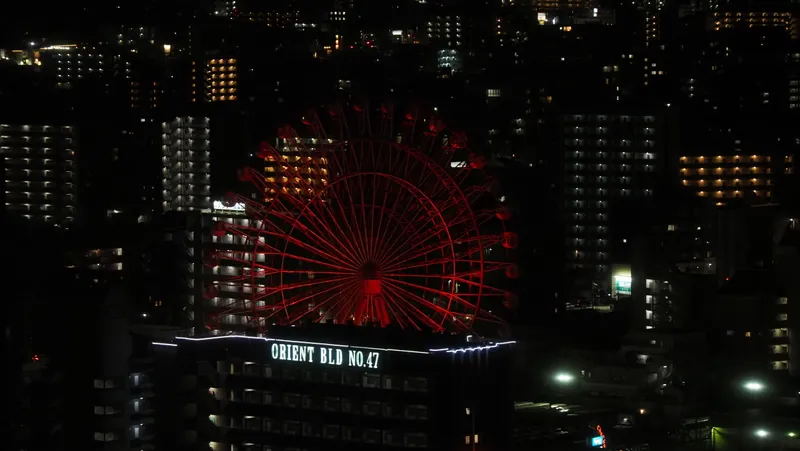
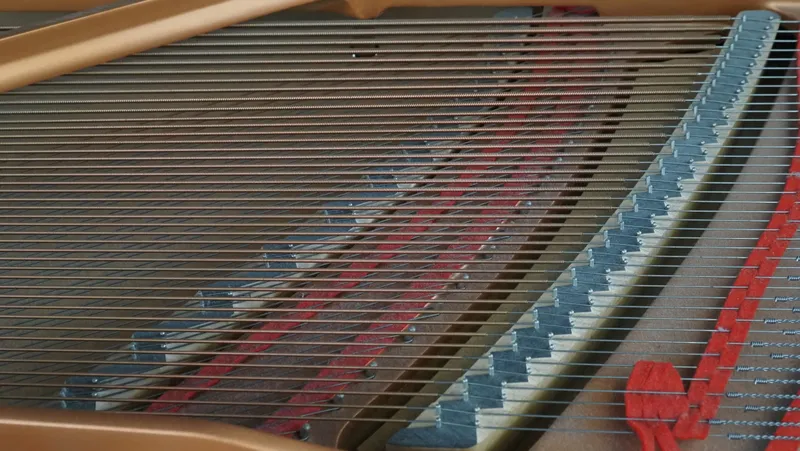
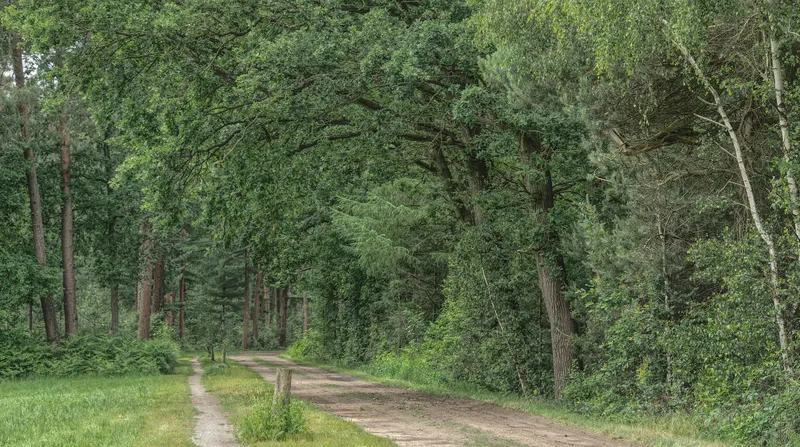

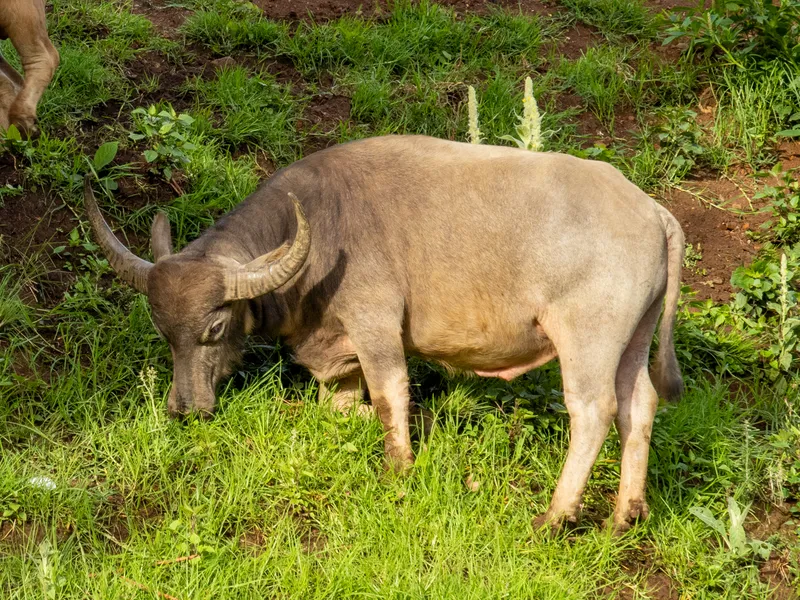


The numbers, and where they come from
Published by the maker
| Sensor size (maker's figure) | 17.3 x 13 mm |
|---|---|
| Effective pixels | 20.4 MP |
| Pixel dimensions (4:3) | 5,184 x 3,888 |
| Continuous shooting | 30 fps (electronic shutter, silent mode, S-AF (10 fps with C-AF)) |
| Buffer (RAW) | 18 frames (RAW at 30 fps, silent mode) |
| Battery (CIPA) | 310 shots |
| Weight with battery and card | 418 g |
| Viewfinder resolution | 2.36 million dots |
Maker figures checked on 19 Nov 2026 — maker's spec sheet. Continuous shooting, in the maker's words: Silent mode / Speed (H): Approx. 30fps / Max. number of frames: RAW 18 / JPG (LF): 20 ... Capture fast action in complete silence with 10fps (C-AF) or 30fps (S-AF) sequential shooting
Computed from those figures
| Pixel pitch | 3.34 µm |
|---|---|
| Sensor area | 225 mm² |
| Format factor | 2x |
| Light gathered vs 35mm | −1.9 stops |
| Print at 300 dpi | 44 cm |
| Diffraction limit | f/5 |
Computed from the figures above. Pixel pitch = sensor width / pixel count across. Light gathered = log2 of the area ratio to 36 x 24 mm. Diffraction limit = the aperture at which the Airy disc diameter (2.44 x lambda x N, lambda = 550 nm) reaches two pixel pitches. Other calculators use other thresholds and so quote other numbers.
What owners report
We read 83 public posts and reviews on 21 Nov 2026: reddit.com/r/OMSystem (51), bhphotovideo.com (32). Each point below came up from at least two different people; the wording is ours.
Praised repeatedly
- Owners like how small and light it is for travel. [1][2][3][4]
- Owners have used it in heavy rain and downpours and value the weather sealing. [1][2][3][4]
- Owners praise the in-body stabilisation, including for handheld shots at night. [1][2][3]
- Owners who upgraded from earlier models say the new menu is much easier to use. [1][2][3]
- Owners find the redesigned grip comfortable. [1][2][3]
- Owners like the computational modes such as focus stacking and the built-in ND filter. [1][2]
Complained about repeatedly
- Several owners say the battery does not last long and recommend carrying a spare. [1][2][3]
- Owners find charging the battery in the camera slow or inconvenient. [1][2][3]
- Two owners miss the wider subject recognition of the larger OM-1 models. [1][2]
These are public posts. We do not check whether the people who wrote them bought or used this camera.
How this score is put together
7.4 out of 10
- Image quality Weight 25% 7.2
20.4MP Four Thirds sensor, 17.3 x 13.0 mm
- Autofocus Weight 20% 6.8
121 cross-type phase-detection points plus 121-point contrast AF
- Video Weight 20% 7.0
4K30 and C4K24, Full HD at 120 fps, no 4K60
- Speed Weight 15% 8.0
30 fps electronic in silent mode with S-AF; 10 fps with C-AF
- Handling and build Weight 20% 8.2
6.5-stop IBIS (7.5 with Sync IS), IP53 per OM System, 418 g with battery and card
Scored against Micro Four Thirds cameras. The overall figure is the weighted mean of the rows above — it is computed, not set by hand.
How It Compares
| Spec | OM System OM-5 Mark II | OM System OM-5 | OM-1 Mark II |
|---|---|---|---|
| Sensor | 20MP MFT | 20MP MFT | 20MP MFT Stacked |
| Video | 4K30 | 4K30 | 4K60 |
| AF Points | 121 points | 121 points | 1053 points |
| Burst | 30 fps electronic | 30 fps | 120 fps electronic |
| IBIS | 6.5 stops | 6.5 stops | 8.5 stops |
| Buy | Check price at Amazon (affiliate link) | Check price at Amazon (affiliate link) | Check price at Amazon (affiliate link) |
FAQ
What changed from the OM-5?
On OM System's two spec pages, weight with battery and card is 418 g on the Mark II and 414 g on the OM-5 (366 g body only on both). The Mark II's page adds the OM-Cinema1 and OM-Cinema2 picture modes to Flat and OM-Log400, a "USB 3: Type C" line in the interface list, and Sand Beige alongside black and silver. The OM-5's page lists IP53 under Tough Features, for use with a splashproof lens; the Mark II's lists only freezeproofing there, and its product page states IP53. For movie recording, the OM-5's battery entry gives 60 minutes under JEITA conditions (110 without zoom or other operations); the Mark II's gives no minute figure. Sensor, viewfinder, AF points, burst rates, stabilisation, video modes and the CIPA figure of 310 shots read the same on both pages.
How fast is the OM-5 Mark II's burst?
Approx. 30 fps in silent mode with the electronic shutter, for 18 RAW or 20 JPEG frames; the product page ties that rate to S-AF and gives 10 fps with C-AF. Standard sequential shooting runs at approx. 10 fps for 149 RAW frames. Pro Capture adds up to 14 frames from before the full press.
Does the OM-5 Mark II record 4K60?
No. 4K (3,840 × 2,160) goes up to 30p and C4K (4,096 × 2,160) is 24p. Full HD goes to 60p, and 120 fps as high-speed recording.
What memory card does it take?
SD, SDHC or SDXC cards, UHS-I or UHS-II. OM System recommends Class 10 or higher for video, and UHS-II or UHS-I U3 cards for 4K, C4K and ALL-I recording.
Is the OM-5 Mark II weather sealed?
OM System's product page states IP53-certified weather sealing against dust, rain and cold. The spec table lists freezeproofing to −10 °C and an operating range of −10 to 40 °C.
Recommended Accessories
Accessories for the OM System OM-5 Mark II:

SanDisk Extreme PRO 256GB V60
A UHS-II SD card (V60). OM System lists UHS-II support and recommends UHS-II or UHS-I U3 cards for 4K, C4K and ALL-I recording.

SanDisk Extreme 128GB SD
A UHS-I U3 SD card (V30). OM System recommends UHS-II or UHS-I U3 cards for 4K, C4K and ALL-I recording.
More gear guides: Best TripodsBest Camera BagsBest SD Cards
Final Recommendation
The OM-5 Mark II is a 20.4 MP Micro Four Thirds camera at 418 g with battery and card, with 5-axis stabilisation rated up to 6.5 EV steps (7.5 with Sync IS) and IP53 weather sealing per OM System's product page. Video stops at 4K 30p, and 30 fps bursts need silent mode with S-AF. Its spec page lists the same sensor, AF, burst, video and CIPA battery figures as the OM-5's.
Buy it if: you want an IP53-rated Micro Four Thirds body at 418 g with 5-axis stabilisation, Live ND, High Res Shot and Pro Capture.
Skip it if: you need 4K above 30p, more than 20.4 MP, 30 fps with C-AF, or a headphone jack (OM System's interface list shows none), or if you own an OM-5 and want different sensor, AF, burst or video figures.
