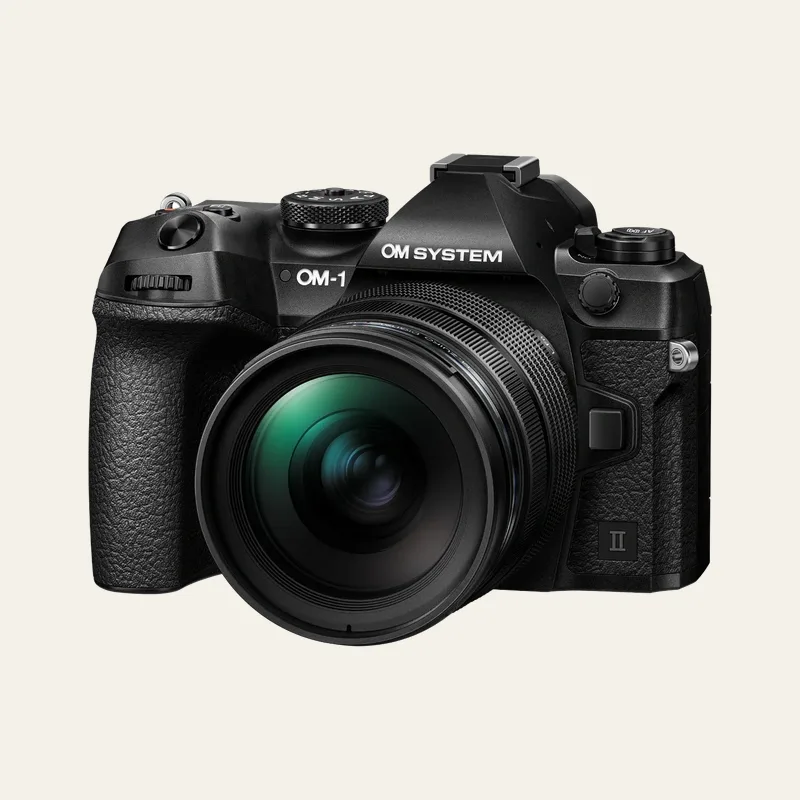
OM System OM-1 II vs OM System OM-5

Two weather-sealed Micro Four Thirds bodies, one flagship and one rugged all-rounder. We compare sensor, autofocus, burst, video, and stabilization to settle whether the OM-1 II is worth nearly double.

Updated: February 2026

OM System OM-1 Mark II vs OM System OM-5 side-by-side comparison

Quick Verdict

🏆 Best for Wildlife/Action

OM System OM-1 Mark II

Choose if: You shoot fast-moving wildlife, birds, or sports and want the best autofocus, burst, and video in the system. The flagship to grow into.

Sensor 20MP Stacked MFT
Video 4K120
IBIS 8.5 stops
Burst 120fps
⛰️ Best for Travel/Value

OM System OM-5

Choose if: You hike, travel, and shoot landscapes and want pro weather-sealing and class-leading IBIS in the lightest, most affordable MFT body.

Sensor 20MP MFT
Video 4K30
IBIS 8.5 stops
Burst 30fps

Full Specs Comparison

Specification OM System OM-1 Mark II OM System OM-5
Sensor 20MP Stacked BSI Live MOS MFT 20MP Micro Four Thirds Live MOS
Processor TruePic X TruePic IX
Video (Max) C4K/4K 60p, 4K 120p, FHD 240p 4K30 (Cinema 4K 4096×2160)
Internal Recording 10-bit 4:2:2 (H.265) 8-bit 4:2:0 (H.264/H.265)
Autofocus 1,053-point cross-type PDAF, AI subject detection 121-point cross-type on-chip PDAF
Subject Detection Human, Animal, Bird, Vehicle, Insect Human + Animal Face/Eye
IBIS 5-axis, 8.5 stops (with Sync IS) 5-axis, 8.5 stops (8 stops with Sync IS)
Burst Speed 120fps (locked AF), 50fps (AF/AE) 30fps electronic, 10fps mechanical
Viewfinder 5.76M-dot OLED, 0.83x, 120fps 2.36M-dot OLED, 120fps
Screen 3.0" vari-angle, 1.62M-dot 3.0" vari-angle, 1.04M-dot
Card Slots Dual SD UHS-II 1x SD UHS-II
Weather Sealing IP53 (dust + splash), -10°C IP53 (dust + splash), -10°C
Battery Life BLX-1, ~500 shots (CIPA) BLS-50, ~310 shots
Weight 599g (body only) 414g (body only)
Price (Body) ~$2,199 ~$1,199

Autofocus: Head-to-Head

This is the single biggest gap between the two bodies. The OM-1 II's stacked sensor unlocks a far more advanced AF system:

OM-1 Mark II

  • 1,053 cross-type AF points
  • AI detection: birds, vehicles, insects
  • Reliable to -6 EV in low light
  • Tenacious C-AF through obstacles

OM-5

  • Reliable Human + Animal Eye AF
  • Competent for portraits & static work
  • Only 121 points (dated)
  • Drops focus on fast, erratic subjects

Winner: OM-1 Mark II, decisively. If you shoot action or wildlife, this alone justifies the upgrade.

Burst & Speed: The Stacked-Sensor Advantage

The OM-1 II's stacked sensor is built for speed, and it shows in both frame rates and buffering:

OM-1 Mark II

  • 120fps with locked AF (SH2)
  • 50fps with full AF/AE tracking
  • Pro Capture buffers up to 70 frames pre-shutter
  • Minimal rolling shutter

OM-5

  • 30fps electronic shutter
  • 10fps mechanical with full AF
  • Buffer ~70 frames RAW at 30fps
  • Non-stacked sensor: more rolling shutter

Winner: OM-1 Mark II. 30fps is still capable for wildlife, but the flagship operates in a different league.

Video Quality

The OM-1 II is a far more serious video tool:

OM-1 Mark II

  • C4K/4K 60p, 4K 120p slow motion
  • 10-bit 4:2:2 internal (H.265)
  • OM-Log400 + HLG profiles
  • No recording limits, good heat management

OM-5

  • 4K30 max (Cinema 4K)
  • 8-bit 4:2:0 only (no 10-bit)
  • OM-Log, Flat, Natural profiles
  • Excellent in-body stabilization for video

Winner: OM-1 Mark II. 4K120, 10-bit, and no limits put it clearly ahead for hybrid shooters.

Stabilization, Sealing & Portability

This is where the OM-5 closes the gap, and where the value case is made. Both bodies share the OM System hallmarks:

  • IBIS: Both reach 8.5 stops (body IBIS on the OM-5, and with Sync IS on the OM-1 II), the best stabilization under $2,000. Handheld 1-2 second exposures are realistic on either body.
  • Weather sealing: Both carry the IP53 rating and -10°C freeze-proofing. The OM-5 inherits the flagship's legendary durability.
  • Portability: At 414g the OM-5 is nearly 200g lighter than the 599g OM-1 II, and far cheaper, so a full body-plus-three-lens kit fits in a small sling.

Winner: Tie on IBIS and sealing; OM-5 for sheer lightness and pack-friendliness.

Our Scores

9.2OM-1 II Overall
9.4OM-5 Overall

Who Should Buy What?

🦅 Choose OM-1 Mark II if you...

  • Shoot fast wildlife, birds, or sports
  • Need AI subject detection and -6 EV AF
  • Want 120fps burst with Pro Capture
  • Record serious video (4K120, 10-bit)
  • Use a dual-slot pro body with a bigger EVF

🥾 Choose OM-5 if you...

  • Hike, travel, and count every gram
  • Shoot landscapes, not fast action
  • Want pro weather-sealing on a budget
  • Love computational features (High-Res, Live ND)
  • Prefer to spend the savings on glass

Bottom Line: Should You Upgrade?

If you shoot action or video: The OM-1 Mark II is worth the ~$1,000 premium. The stacked sensor, 1,053-point AI autofocus, 120fps burst, and 4K120 are upgrades the OM-5 simply cannot match.

If you shoot travel or landscapes: The OM-5 delivers the same 8.5-stop IBIS, the same IP53 sealing, and the same computational tricks for half the price and 185g less weight. Spend the difference on lenses.

Both share the same 20MP MFT image quality. The decision is about speed and video versus weight and value, not picture quality.

Affiliate Disclosure

This page contains affiliate links. If you purchase through our links, we may earn a small commission at no extra cost to you. This helps support our independent testing.

cameraupick Editorial Team

Written by cameraupick Editorial Team

Our team of professional photographers and videographers has 10+ years of experience testing cameras. We buy our own gear and provide honest, unbiased reviews.

Learn more about our testing process →

Camera Assistant

AI-powered recommendations
👋 Hi! I'm your camera expert. Tell me what you're looking for and I'll help you find the perfect camera!