
The Lens Ecosystem
If you choose Sony, you get cheap third-party lenses. If you choose Canon, you get expensive but brilliant proprietary lenses. Choose the system, not just the body.
One camera to rule them all. These hybrid workhorses deliver 33MP+ high-resolution stills for clients and 10-bit 4K video for YouTube, all in a single body.

Disclosure: As an Amazon Associate I earn from qualifying purchases. Links to retailers on this page are affiliate links. We earn a commission on purchases made through them, at no extra cost to you. It doesn't change our verdicts.
 Best Overall Sony A7 IV Check price at Amazon
 Best for Video Panasonic Lumix S5II Check price at Amazon
 Best for Action Canon EOS R6 Mark II Check price at Amazon
 Best Value Canon EOS R8 Mark II Check price at Amazon
| Model | Best For | Megapixels | Video Specs | Price |
|---|---|---|---|---|
| Sony A7 IV | The Standard | 33 MP | 4K60 (Crop) | Check price at Amazon |
| Panasonic S5II | Value / Video | 24 MP | 6K Open Gate | Check price at Amazon |
| Canon R6 Mark II | Speed / Action | 24 MP | 4K60 (None) | Check price at Amazon |
| Sony A6700 | Best APS-C | 26 MP | 4K120 | Check price at Amazon |
| Nikon Z6 III | Nikon Hybrid | 24.5 MP | 6K Raw | Check price at Amazon |
| Fujifilm X-T5 | Photo Focus | 40 MP | 6.2K | Check price at Amazon |
| Sony A7C II | Compact FF | 33 MP | 4K60 | Check price at Amazon |
| Canon EOS R8 Mark II | Entry FF + IBIS | 24 MP | 4K60 (Full Width) | Check price at Amazon |
| Canon R8 | Lightweight FF | 24 MP | 4K60 | Check price at Amazon |
Spec figures from the makers: Sony A7 IV (sony.co.uk, checked 25 Sept 2026) · Panasonic S5II (help.na.panasonic.com, checked 26 Sept 2026) · Canon R6 Mark II (canon-europe.com, checked 25 Sept 2026) · Sony A6700 (sony.co.uk, checked 25 Sept 2026) · Nikon Z6 III (nikonusa.com, checked 25 Sept 2026) · Fujifilm X-T5 (fujifilm-x.com, checked 25 Sept 2026) · Sony A7C II (sony.co.uk, checked 25 Sept 2026) · Canon EOS R8 Mark II (canon-europe.com, checked 16 Oct 2026) · Canon R8 (canon-europe.com, checked 25 Sept 2026)
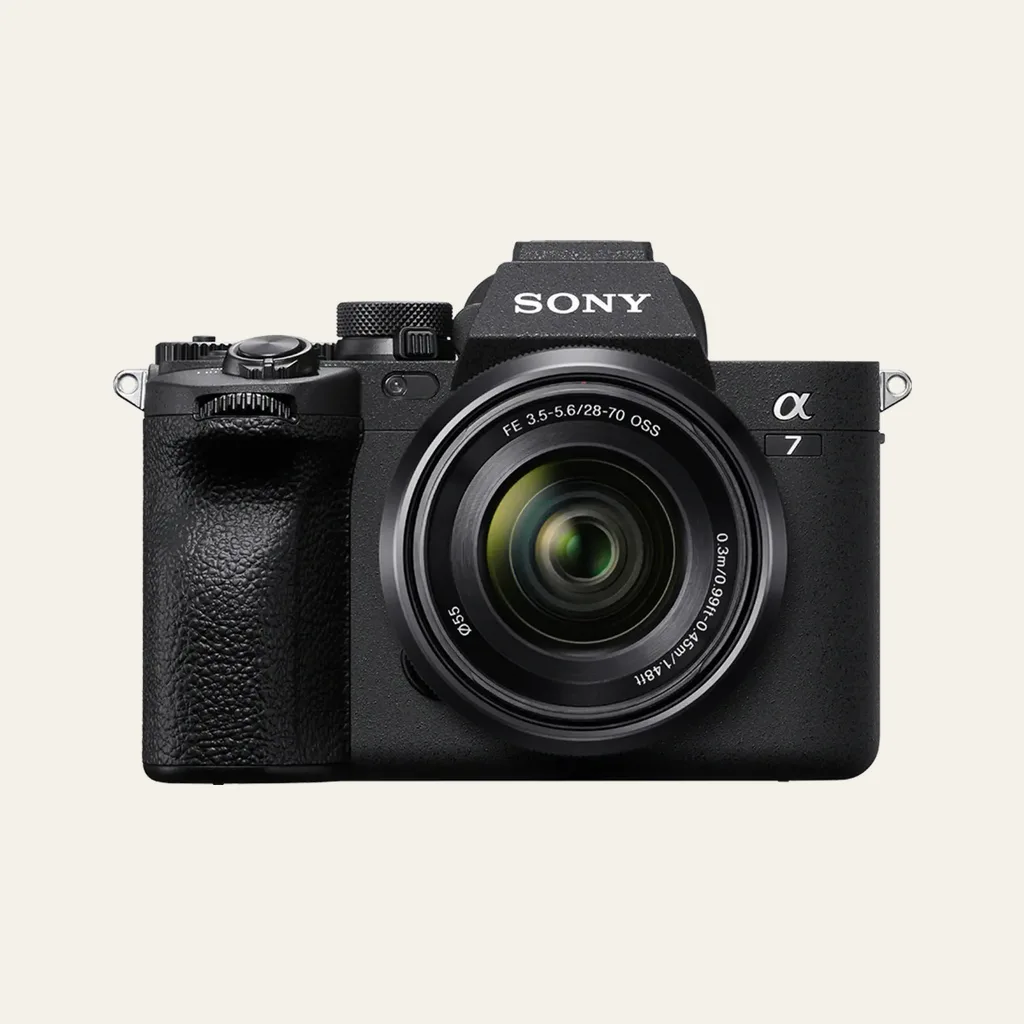
This is the camera that defines "modern hybrid." With a 33MP sensor, it offers significantly more cropping room for photos than its 24MP rivals. The autofocus is legendary—it tracks eyes like a magnet.
It has a huge ecosystem of third-party lenses from Sigma, Tamron, and Samyang, making it the most affordable system to build long-term.
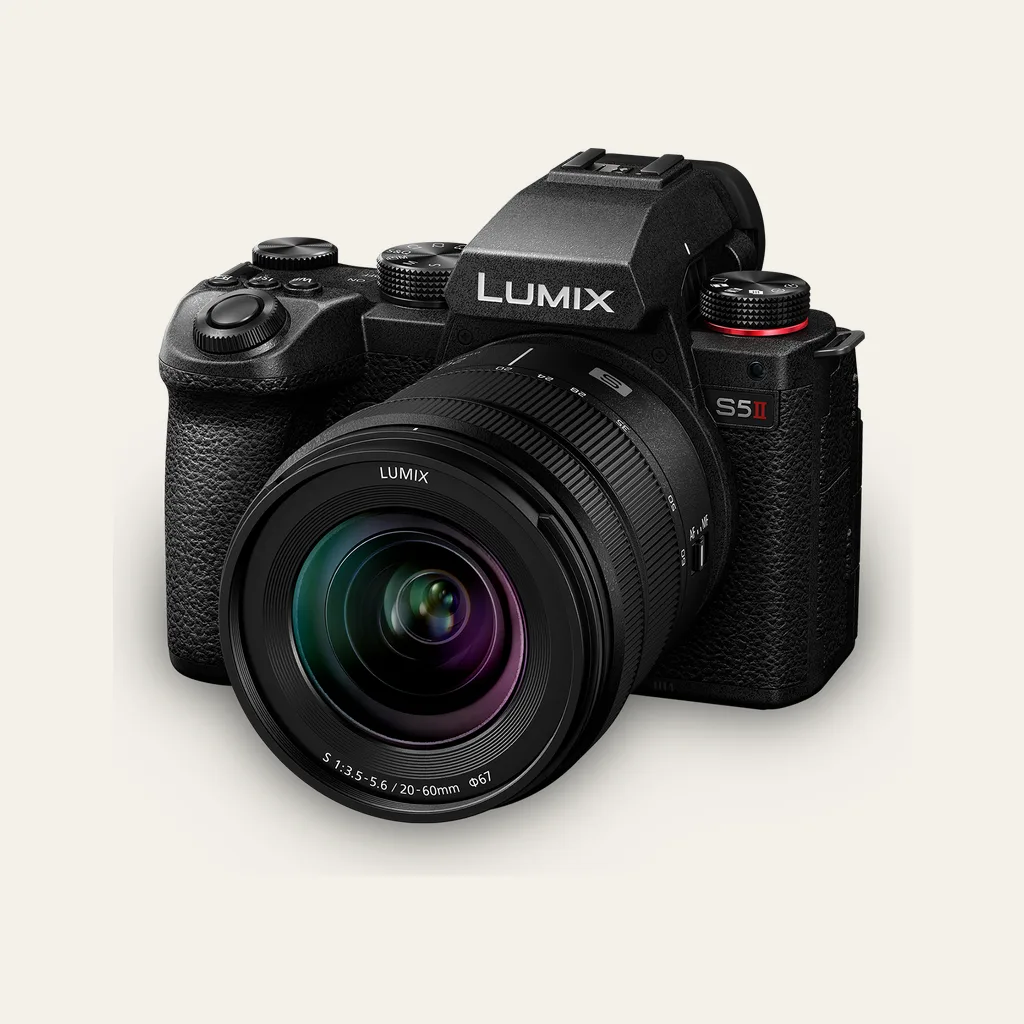
Panasonic finally fixed their autofocus. The S5II uses Phase Detect AF (PDAF), making it reliable for solo shooters. But its superpower is "Open Gate" 6K video, which lets you record the full sensor height.
Why does that matter? It allows you to crop a vertical 9:16 (TikTok) and a horizontal 16:9 (YouTube) video from the same clip without losing quality. It also has a built-in fan. Panasonic names one recording stop: 30 minutes in 6K and 5.9K at 30p/25p with Thermal Management on Standard; in other modes a new file starts at the file limit and recording continues.

Need speed? The R6 Mark II shoots a blistering 40 frames per second electronically. It’s a monster for sports and wildlife. For video, it’s the only camera in this price range that shoots 4K 60p using the full width of the sensor (no crop).
The ergonomics are fantastic, and the autofocus sticks to subjects tenaciously. It’s a pure joy to use if you prioritize speed and usability.

The R8 in the table above has no in-body stabilisation. Its successor does: sensor-shift IS that Canon rates at up to 7.5 stops in the centre, measured to CIPA 2024 together with the stabilised RF 24-105mm F2.8 L IS USM Z. For a hybrid body, that is the change that matters: on the R8, nothing steadies an unstabilised prime; on the Mark II, the sensor moves.
Video is 4K UHD up to 59.94p across the full sensor width, oversampled from 6K, with Canon Log 3, HDR PQ and Full HD to 179.82p; clips can run up to six hours below 100 fps, though Canon publishes no overheating times. Stills get 24.2MP, 40 fps electronic with a 73-RAW buffer and 20 frames of pre-capture. The limits: one SD slot, 340 shots per charge on the screen, and 546 g with card and battery. Canon Germany gives 20 October 2026 as the availability date.
If you choose Sony, you get cheap third-party lenses. If you choose Canon, you get expensive but brilliant proprietary lenses. Choose the system, not just the body.
24MP is plenty for 4K video and social media. Only pay extra for the Sony A7 IV's 33MP if you crop heavily or print huge billboards.
Hybrid cameras excel with: (1) Fast continuous autofocus for video, (2) In-body stabilization (IBIS) for handheld shots, (3) High-resolution sensor for detailed photos, (4) 4K video at 60fps minimum, (5) Good rolling shutter performance.
Not necessarily. APS-C hybrids like Sony A6700 deliver excellent results for both. Full-frame (Sony A7 IV, Panasonic S5 II) offers better low-light and background blur but costs more. Start with APS-C unless you shoot professionally.
IBIS is better for hybrid work. It stabilizes any lens (including vintage glass) and works for both photo and video. Lens stabilization only helps with that specific lens. Canon R6 II and Panasonic S5 II have excellent IBIS systems. The original Canon R8 has no IBIS; the R8 Mark II adds sensor-shift IS, which Canon rates at up to 7.5 stops measured together with a stabilised lens.
Some can, especially in 4K 60p. Panasonic S5 II and Sony A7 IV rarely overheat thanks to active cooling and efficient processors. Canon R6 II improved over R6 but can still limit recording in hot conditions. Check specific camera reviews for thermal performance.

We buy or rent our own equipment. No manufacturer paid for this guide. We earn a commission when you use our affiliate links, which keeps this site ad-free.