
Sony A6400 Review
The Sony A6400 was revolutionary when it launched in 2019, introducing Real-time Eye AF that changed the industry. Now available used for $700-800, it remains one of the best value propositions in mirrorless cameras—especially for beginners entering the Sony ecosystem.
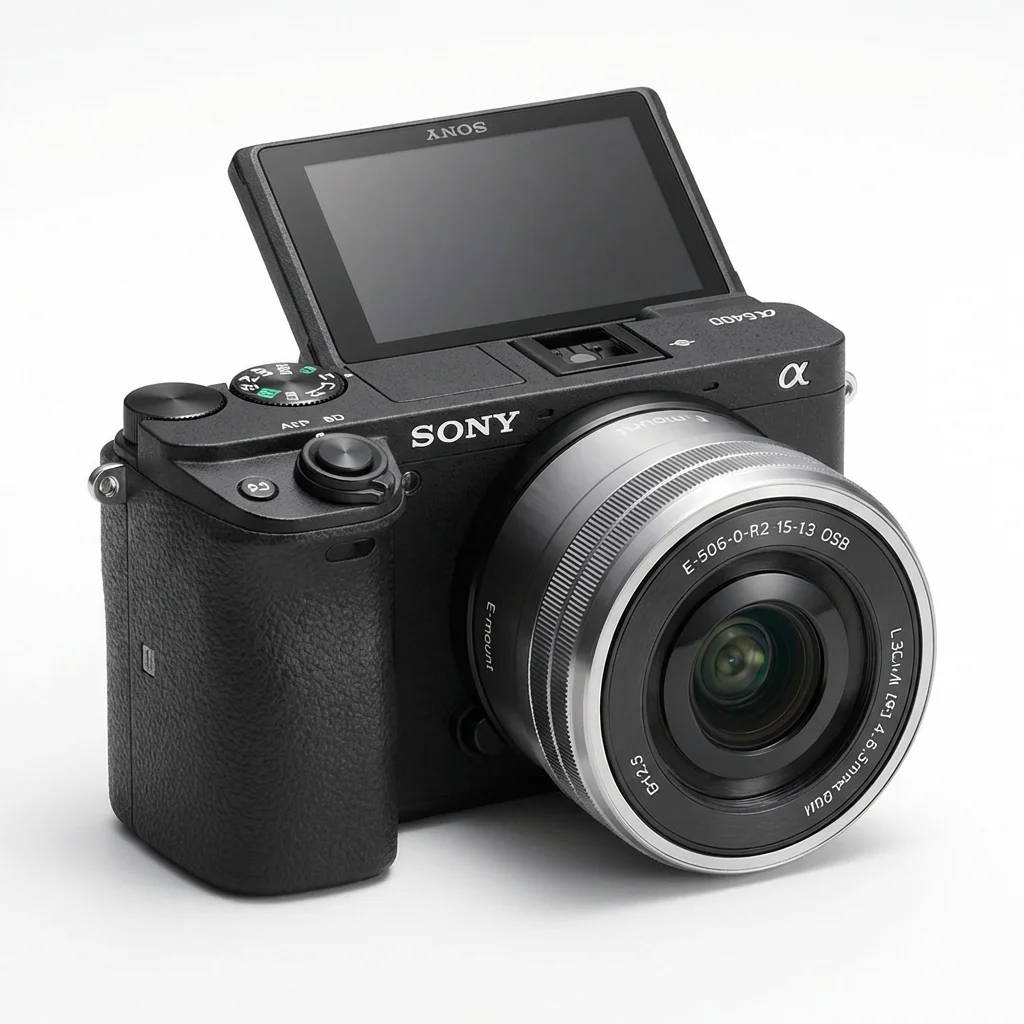
The Verdict
The A6400 was Sony's mid-range APS-C champion, and its Real-time Eye AF was groundbreaking. This same autofocus technology trickled up to full-frame cameras like the A7 III and A9. In 2026, newer models like the A6700 have surpassed it, but at $700-800 used, the A6400 offers incredible value.
For beginners and hobbyists who want reliable autofocus, a solid EVF, and access to Sony's extensive E-mount lens library, the A6400 remains a smart choice—especially if buying used or refurbished.
| Imaging | |
|---|---|
| Sensor | 24.2MP APS-C CMOS |
| Processor | BIONZ X |
| ISO Range | 100-32,000 (expandable to 102,400) |
| IBIS | None (lens stabilization only) |
| Autofocus | |
| AF System | 425-point PDAF (84% coverage) |
| Eye AF | Real-time Eye AF (human + animal) |
| Tracking | Real-time Tracking |
| Low Light AF | -2 EV |
| Video | |
| Max Resolution | 4K30 (full pixel readout) |
| Internal Rec | 8-bit 4:2:0 |
| Profiles | S-Log2, S-Log3, HLG |
| Recording Limit | None (unlimited) |
| Build | |
| Body | Magnesium alloy front, dust & moisture resistant |
| Screen | 3" 180° tilting touchscreen |
| EVF | 2.36M-dot OLED |
| Card Slots | Single SD (UHS-I) |
| Battery | NP-FW50 (410 shots) |
| Weight | 403g (body only) |
What We Like
- Legendary Real-time Eye AF (still holds up)
- Built-in EVF (2.36M dots OLED)
- Compact, lightweight body (403g)
- Huge E-mount lens selection
- Incredible used value ($700-800)
Trade-offs
- No in-body stabilization (IBIS)
- Older menu system
- Single SD card slot (UHS-I)
- 8-bit video only internally
- Smaller battery (NP-FW50)
Performance Breakdown
Real-time Eye AF: The Game Changer
When the A6400 launched, its Real-time Eye AF was industry-leading. The camera detects and locks onto human or animal eyes automatically, tracking them through the frame. For portraits, events, and casual street photography, this takes the stress out of focus.
While newer cameras like the A6700 have AI-powered subject recognition (birds, cars, etc.), the A6400's human/animal Eye AF still works brilliantly for most photographers. In 2026, it's still more reliable than many new budget cameras.
Video Capabilities
4K30 with full pixel readout from APS-C delivers sharp, detailed footage. S-Log2 and S-Log3 give color grading flexibility. The 180° flip-up screen—Sony's first on an APS-C mirrorless—makes it a decent vlogging option.
The main video limitation is 8-bit internal recording. The ZV-E10 II and A6700 shoot 10-bit, which gives more grading headroom. For YouTube and social media where heavy grading isn't needed, 8-bit is perfectly fine.
Photo Performance
The 24.2MP sensor produces excellent images with good dynamic range. ISO performance is solid up to ISO 6400; ISO 12,800 is usable for emergencies. Without IBIS, you'll rely on lens stabilization or tripods for low-light handheld shots.
11fps burst shooting with AF tracking is excellent for action. The buffer handles ~100 JPEGs or 46 RAW files, which is sufficient for events and sports.
Why Buy Used in 2026?
The A6400 launched at $900 body-only. Used prices have dropped to $700-800 since the A6600, ZV-E10 II, and A6700 were released. At this price, you get a camera with autofocus that rivals $1,000+ bodies—an incredible entry point to Sony's system.
If you later upgrade to the A6700 or full-frame, all your E-mount lenses transfer over. Starting with the A6400 is a smart, budget-conscious way to join the Sony ecosystem.
Ideal Lenses
Sigma 18-50mm f/2.8 DC DN
Compact f/2.8 standard zoom. Excellent sharpness, affordable ($549). The best all-around lens for A6400 shooters.
Sony 35mm f/1.8 OSS
Fast prime with built-in stabilization. Perfect for portraits, low-light, and walk-around shooting. Sharp, compact, affordable.
Sony 16-50mm f/3.5-5.6 PZ
The kit lens. Tiny and light—collapses into the body. Good for travel if you prioritize size over image quality.
How It Compares
| Spec | Sony A6400 ★ | Sony A6700 | Canon R50 |
|---|---|---|---|
| Price | $750 | $1,398 | $679 |
| Sensor | 24MP APS-C | 26MP APS-C | 24MP APS-C |
| Video | 4K30 | 4K120 | 4K30 |
| AF Points | 425 points | 759 points | 651 zones |
| Burst | 11 fps | 11 fps | 12 fps |
| IBIS | None | 5.5 stops | None |
Recommended Accessories
Essential gear to maximize your Sony A6400 experience:
Sigma 18-50mm f/2.8 DC DN
Compact f/2.8 zoom with excellent sharpness. Best value standard zoom for E-mount APS-C.
Sony NP-FW50 (2-pack)
The A6400's small battery means you'll need spares. Third-party 2-packs offer great value.
SanDisk Extreme 64GB
UHS-I is all the A6400 needs. Fast, reliable, affordable storage.
Peak Design Everyday Sling 6L
Compact sling bag perfect for the A6400 with one lens. Stylish and functional.
Sony A6400 FAQ
Yes, especially used. At $700-800, you get legendary Eye AF, a built-in EVF, and access to Sony's E-mount ecosystem. For beginners and hobbyists who don't need 4K60 or IBIS, it's an excellent value.
The ZV-E10 II ($998 new) is better for video: 4K60, 10-bit, vlogging features. The A6400 has an EVF, which the ZV-E10 II lacks. For stills and all-around use, A6400. For video-first creators, ZV-E10 II.
At launch, Sony reserved IBIS for higher-end models (A6600). For stabilization, use OSS lenses, a gimbal, or a tripod. Alternatively, upgrade to the A6700 which has excellent 5-axis IBIS.
KEH, MPB, and B&H Used offer warranties and condition ratings. eBay is riskier but often cheaper. Buy from sellers with high feedback and detailed photos showing shutter count.
Final Recommendation
The Sony A6400 is the best used camera for beginners entering the mirrorless world in 2026. Its Real-time Eye AF is still better than many new budget cameras, the EVF is sharp and responsive, and the E-mount lens ecosystem is unmatched in variety and value.
Buy it if: You're on a budget, want reliable autofocus, value having an EVF, and plan to grow with the Sony system. It's the smartest entry point.
Skip it if: You need IBIS (hand-shake stabilization), 4K60 video, or the latest features. In that case, stretch for the Sony ZV-E10 II or A6700.