
Nikon Z6 III Review
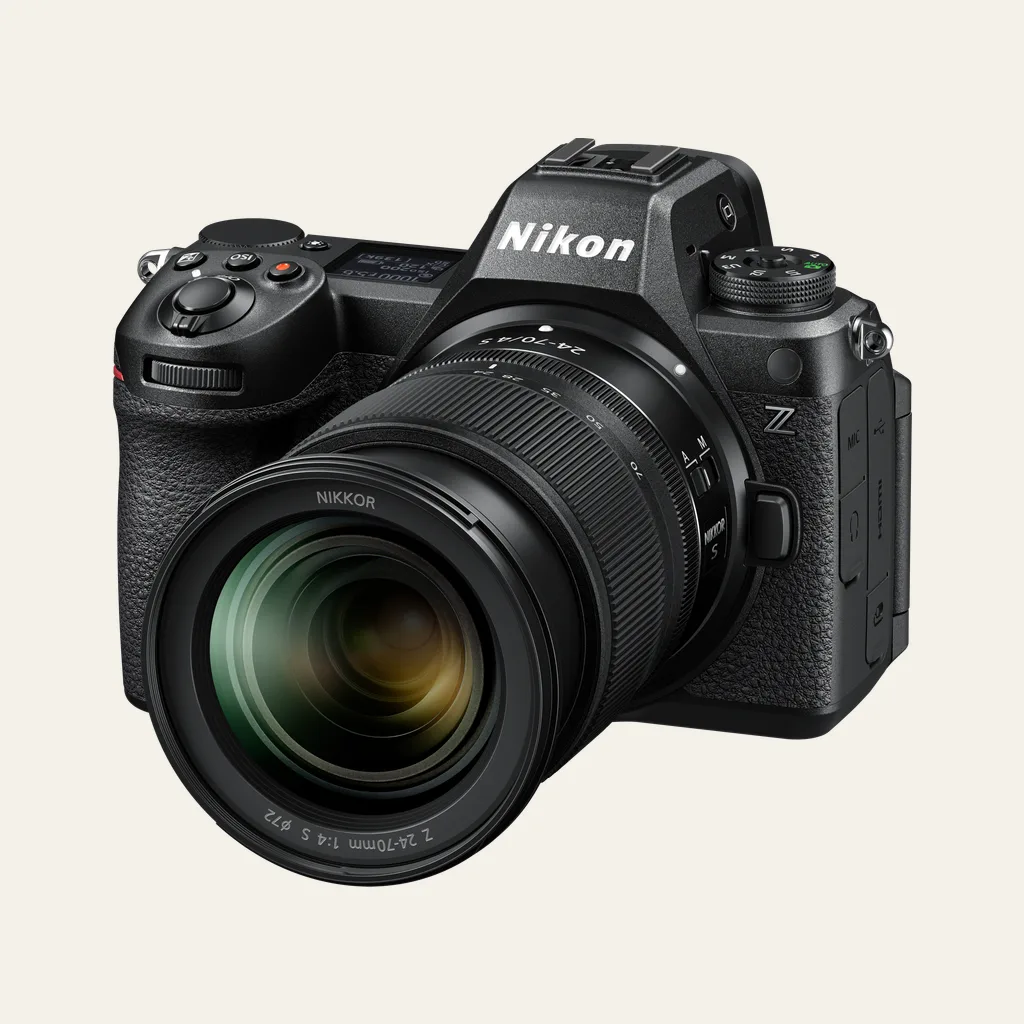
The Nikon Z6 III strikes the perfect balance between photo and video capabilities. With a partially stacked 24.5MP sensor, 6K internal recording, and Nikon's best autofocus system yet, it's the versatile tool professionals have been waiting for.
Disclosure: As an Amazon Associate I earn from qualifying purchases. Links to retailers on this page are affiliate links. We earn a commission on purchases made through them, at no extra cost to you. It doesn't change our verdicts.
The Verdict
The Nikon Z6 III represents a significant evolution in Nikon's full-frame lineup. By combining a partially stacked sensor with advanced video features and improved autofocus, Nikon has created a camera that excels equally in photography and videography without compromise.
This is the camera for hybrid shooters who refuse to choose between stills and video. Whether you're covering weddings, shooting documentaries, or creating content for clients, the Z6 III provides professional results with exceptional ergonomics and reliability.
- Overall
- 8.8/10
- Image quality
- 8.4
- Autofocus
- 8.7
- Video
- 9.2
- Speed
- 8.7
- Handling and build
- 8.9
| Imaging | |
|---|---|
| Sensor | 24.5MP Full-Frame Partially Stacked CMOS |
| Processor | EXPEED 7 |
| Stabilization | 5-Axis IBIS (8 stops with VR lenses) |
| ISO Range | 100-64,000 (exp. 50-204,800) |
| Autofocus | |
| AF Points | 273 focus points (single-point AF), 299 focus points (auto-area AF); both in photo mode with FX image area |
| AF System | 3D-Tracking + Subject Detection (9 subjects) |
| Burst Speed | 14 fps mechanical / 20 fps electronic (JPEG), 10 fps (RAW) |
| Video | |
| Max Resolution | 6K 60p (N-RAW) / 5.4K 60p / 4K 120p |
| Internal Rec | 10-bit 4:2:2 ProRes / H.265 |
| Profiles | N-Log, HLG, SDR |
| Video Features | Focus Breathing Reduction, Waveform, Red frame indicator |
| Build & Connectivity th> | |
| Viewfinder | 5.76M-dot OLED EVF (120fps) |
| Screen | 3.2" Vari-angle Touch (2.1M-dot) |
| Card Slots | 1x CFexpress Type B/XQD + 1x SD UHS-II |
| Ports | USB-C 3.2, full-size HDMI (Type A), Mic/Headphone, 10-pin remote |
| Weather Sealing | Professional grade (dust & moisture resistant) |
| Weight | 760g (body + battery) |
Maker-published figures, with source and date: Numbers & Sources below.
What We Like
- Excellent 24.5MP image quality with clean high-ISO performance
- 6K N-RAW recording for professional video workflows
- Significantly improved autofocus with subject detection
- 8 stops of IBIS (best in class with VR lenses)
- CFexpress Type B/XQD plus SD UHS-II slots for backup or overflow
- 4K 120p for high-quality slow motion
- Exceptional ergonomics and build quality
- Long battery life (up to 410 shots CIPA)
Trade-offs
- 24.5MP resolution may limit extreme cropping vs higher-res models
- Electronic shutter still shows mild rolling shutter
- CFexpress Type B cards required for full 6K recording
- Heavier than Sony A7C II or Canon R8
In-Depth Performance
Image Quality & Sensor Performance
The 24-megapixel partially stacked sensor is a sweet spot for hybrid shooting. While not as high-resolution as the Z8 or Z9, it delivers exceptional image quality with larger pixels that excel in low light. The sensor's partial stacking enables improved readout speeds, reducing rolling shutter and enabling faster burst rates.
This mix of resolution and readout speed is what puts the Z6 III on shortlists for wedding photographers, event coverage, and available-light work.
Autofocus Revolution
Nikon has made massive strides in autofocus with the Z6 III. The hybrid AF system now includes deep learning-based subject detection for 9 subject types: people, dogs, cats, birds, cars, motorcycles, bicycles, trains, and airplanes. Eye detection works reliably even when subjects are small in frame or partially obscured.
3D-Tracking has been refined to stick to subjects with remarkable tenacity. Low-light AF performance is exceptional, working down to -9 EV—usable in near-dark conditions.
Video Capabilities
The Z6 III's video features are where Nikon flexes its hybrid muscles. Internal 6K 60p N-RAW recording (to CFexpress Type B cards) provides professional latitude for color grading. For most users, the 5.4K 60p oversampled 4K is exceptional—delivering sharp, detailed footage with excellent color science.
4K 120p enables high-quality slow motion without sensor crop, a significant advantage over many competitors. The addition of internal ProRes 422 HQ gives editors maximum flexibility. Nikon gives a maximum internal recording time of 125 minutes, measured in H.265 8-bit (MOV) with the auto temperature cutout set to High, at 23 °C, with a Nikon MC-CF660G card and external power.
Ergonomics & Build
Nikon's ergonomics remain industry-leading. The Z6 III features a deep, sculpted grip that's comfortable even with large telephoto lenses. Button layout is logical, with dedicated ISO, drive mode, and video record buttons. The 3.2-inch touchscreen is a vari-angle design, so it swings out to the side and can face forward.
Build quality is exceptional, with magnesium alloy construction and comprehensive weather sealing. The EN-EL15c battery provides excellent longevity—approximately 410 shots per charge (CIPA). USB-C charging and power delivery enable all-day shooting when needed.
Ideal Lenses for the Nikon Z6 III
Nikon Z 24-70mm f/2.8 S
The cornerstone lens for Z6 III users. Razor-sharp across the entire frame, fast and silent autofocus, and professional build quality. The best general-purpose zoom for weddings, events, and travel.
Nikon Z 70-200mm f/2.8 VR S
Flagship telephoto with outstanding optics and image stabilization. Combined with the Z6 III's IBIS, you can handhold at remarkably slow shutter speeds. Perfect for sports, wildlife, and portrait work.
Nikon Z 35mm f/1.8 S
A compact, affordable prime that punches above its weight. Extremely sharp, beautiful bokeh, and weather-sealed. Ideal for street photography, environmental portraits, and low-light shooting.
Nikon Z 50mm f/1.2 S
Nikon's flagship normal lens delivers stunning image quality and ultra-smooth bokeh. While expensive and hefty, it's unmatched for portrait work and creates images with a unique rendering.
The numbers, and where they come from
Published by the maker
| Sensor size (maker's figure) | 35.9 x 23.9 mm |
|---|---|
| Effective pixels | 24.5 MP |
| Native ISO range | ISO 100–64,000 |
| Battery (CIPA) | 410 shots |
| Viewfinder resolution | 5.76 million dots |
Maker figures checked on 25 Sept 2026 — maker's spec sheet
Computed from those figures
| Sensor area | 858 mm² |
|---|---|
| Format factor | 1x |
| Light gathered vs 35mm | the same |
Computed from the figures above. Pixel pitch = sensor width / pixel count across. Light gathered = log2 of the area ratio to 36 x 24 mm. Diffraction limit = the aperture at which the Airy disc diameter (2.44 x lambda x N, lambda = 550 nm) reaches two pixel pitches. Other calculators use other thresholds and so quote other numbers.
How this score is put together
8.8 out of 10
- Image quality Weight 25% 8.4
24.5MP partially stacked full frame
- Autofocus Weight 20% 8.7
299-point AF with subject detection
- Video Weight 20% 9.2
6K internal N-RAW
- Speed Weight 15% 8.7
20 fps off the partially stacked readout
- Handling and build Weight 20% 8.9
8-stop IBIS, 5.76M-dot EVF, CFexpress B plus SD
Scored against full-frame interchangeable-lens cameras. The overall figure is the weighted mean of the rows above — it is computed, not set by hand.
How It Compares
| Spec | Nikon Z6 III | Sony A7 IV | Canon R6 II |
|---|---|---|---|
| Sensor | 24.5MP FF | 33MP FF | 24MP FF |
| Video | 6K N-RAW | 4K60 | 4K60 |
| AF Points | 299 points | 759 points | 1053 zones |
| Burst | 20 fps | 10 fps | 40 fps |
| IBIS | 8 stops | 5.5 stops | 8 stops |
| Buy | Check price at Amazon | Check price at Amazon | Check price at Amazon |
Recommended Accessories
Essential gear to maximize your Nikon Z6 III experience:
ProGrade CFexpress Type B 256GB
Required for N-RAW and high bitrate recording.
Nikon EN-EL15c
USB-C rechargeable batteries for long shoots.
Nikon Z 24-70mm f/2.8 S
Nikon's flagship standard zoom for S-line quality.
Nikon MB-N14 Battery Grip
Dual battery capacity and improved ergonomics.
More gear guides: Best TripodsBest Camera BagsBest SD Cards
Nikon Z6 III FAQ
The Z6 III offers better video specs (6K vs 4K 60p), superior ergonomics, and longer battery life. The A7 IV counters with higher resolution (33MP vs 24.5MP) and wider native lens selection. Both have excellent autofocus, but Nikon's latest system is slightly more reliable in challenging conditions. Choose Z6 III for video-centric work, A7 IV if you need maximum resolution.
Yes, very good but with caveats. The improved autofocus with bird detection is excellent, and 14fps is adequate for most situations. However, the 24.5MP resolution limits extreme cropping compared to higher-res cameras. It's ideal for wildlife video (4K 120p, 6K), and the buffer can handle long bursts. For resolution-critical work, consider the Z8.
For 6K N-RAW recording, you'll need CFexpress Type B cards with minimum 1400MB/s write speed (recommended: Sony TOUGH or ProGrade Cobalt). For 4K video and photography, high-speed UHS-II SD cards (V90 rated) work excellently. The dual-slot design allows CFexpress for video and SD for photo backup, optimizing workflow.
Nikon gives a maximum internal recording time of 125 minutes, measured in H.265 8-bit (MOV) with the auto temperature cutout set to High, at 23 °C, with a Nikon MC-CF660G card and external power. Nikon publishes no figure for 6K N-RAW.
The Z6 III is ideal for hybrid shooters who value ergonomics, video features, and reliable performance. It's perfect for wedding photographers, documentary filmmakers, event coverage, and content creators who need both excellent stills and professional video. Skip it if you primarily shoot stills and need maximum resolution— consider the Z8 instead.
A partially stacked sensor moves part of the readout circuitry beneath the light-sensitive area, but not all of it the way a full flagship does. That buys faster readout and less rolling shutter than a conventional sensor, at a lower cost than a fully stacked one. The Z6 III was the first consumer camera to use the technology.
Final Recommendation
The Nikon Z6 III is the hybrid camera Nikon users have been requesting. It doesn't chase specifications for spec sheet superiority—instead, it delivers practical, usable features that make real-world shooting easier and more productive. The combination of excellent image quality, professional video capabilities, and refined ergonomics creates a tool you'll rely on day after day.
Buy it if: You're a hybrid shooter who values video quality, ergonomics, and reliability. Perfect for weddings, events, documentary work, and content creation.
Skip it if: You primarily shoot stills and need maximum resolution for extensive cropping—the Z8 or Z9 are better choices.