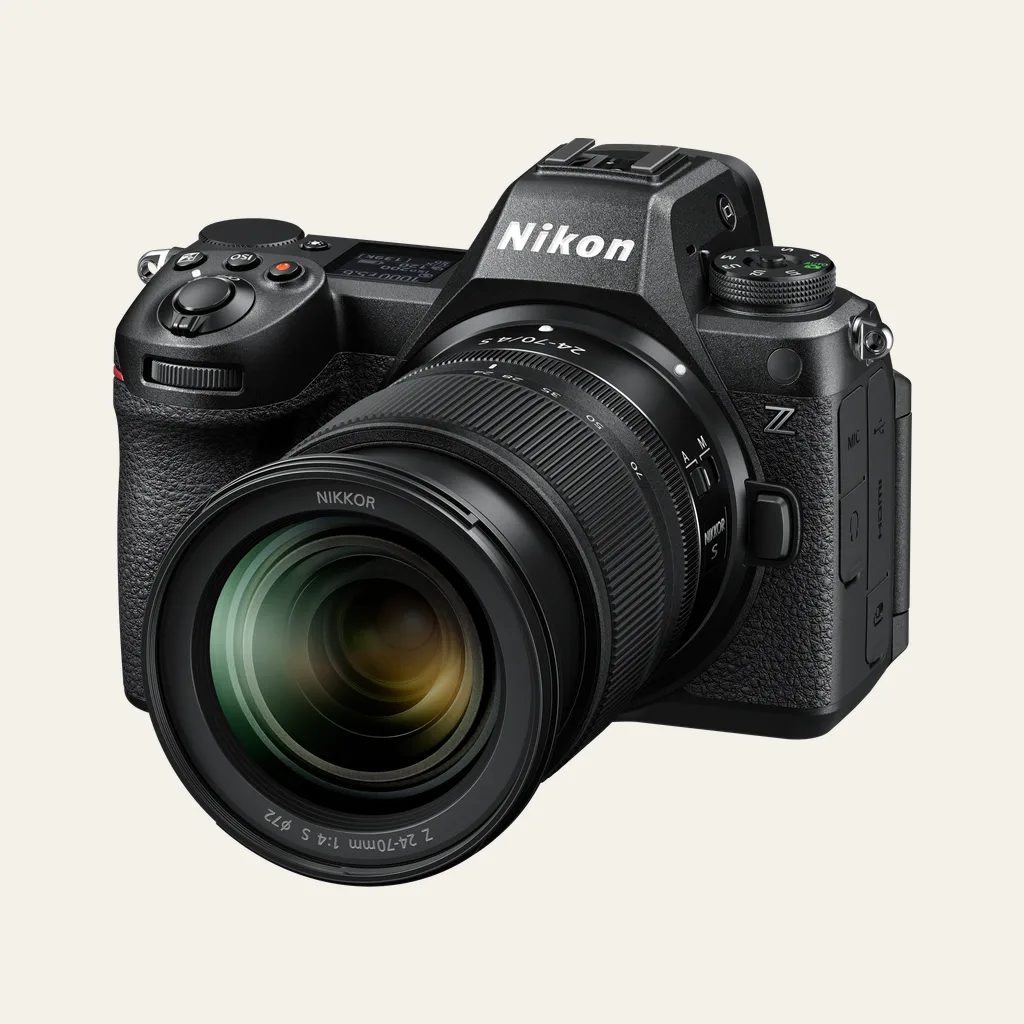
Nikon Z6 III vs Canon R6 Mark II

Two $2,499 full-frame hybrids with very different strengths. We compare sensor technology, video, autofocus, stabilization, and the ecosystem that matters most.

Updated: February 2026

Nikon Z6 III vs Canon R6 Mark II side-by-side comparison

Quick Verdict

🎥 Best for Video/Sensor Tech

Nikon Z6 III

Choose if: You want the fastest readout, 6K N-RAW internal video, and the brightest viewfinder in its class. Best for hybrid creators and video-first shooters.

Sensor 24.5MP Partial Stacked
Video 6K60 N-RAW
IBIS 8 stops
Burst 20fps elec
🏆 Best for Action/Value

Canon R6 Mark II

Choose if: You want proven 24MP, class-leading autofocus, a lighter body, and a deep RF ecosystem. Best for sports, wildlife, and run-and-gun creators.

Sensor 24.2MP FF
Video 4K60 Full
IBIS 8 stops
Burst 40fps elec

Full Specs Comparison

Specification Nikon Z6 III Canon R6 Mark II
Sensor 24.5MP Full-Frame Partially Stacked CMOS 24.2MP Full-Frame CMOS
Processor EXPEED 7 DIGIC X
Video (Max) 6K 60p N-RAW internal, 4K 120p 4K60 full-width, 4K120 (1.2x crop)
Internal Recording 12-bit N-RAW, 10-bit ProRes / H.265 10-bit 4:2:2 C-Log3 / HDR PQ
Autofocus 493-point phase-detect, 3D Tracking + subject detection 1,053-zone Dual Pixel CMOS AF II, deep-learning detection
IBIS 8 stops (with VR lenses) 8 stops
Burst Speed 14fps mechanical, 20fps electronic 12fps mechanical, 40fps electronic
Card Slots 1x CFexpress Type B + 1x SD UHS-II 2x SD UHS-II
Viewfinder 5.76M-dot OLED, 120fps (very bright) 3.69M-dot OLED, 120fps
Screen 3.2" vari-angle, 2.1M-dot 3.2" vari-angle, 1.62M-dot
Battery Life ~410 shots (CIPA) ~760 shots (CIPA)
Weight 760g (body + battery) 670g (body only)
Price (Body) ~$2,499 ~$2,499

Sensor & Readout: The Real Difference

This is where the two cameras diverge the most, even though resolution is nearly identical:

Nikon Z6 III

  • Partially stacked sensor with fast readout
  • Reduced rolling shutter in stills and video
  • 24.5MP with clean high-ISO performance
  • Not a fully stacked sensor (Z8/Z9 are faster)

Canon R6 II

  • Proven 24.2MP CMOS with excellent color science
  • Strong low-light and dynamic range
  • 40fps electronic burst for action
  • More rolling shutter than a stacked sensor

Winner: Nikon Z6 III for readout-sensitive work. The partially stacked sensor reduces rolling shutter the R6 II can't match.

Video Quality

The Z6 III pulls ahead for serious internal video workflows:

Nikon Z6 III

  • 6K 60p N-RAW internal
  • 4K 120p for high-quality slow motion
  • 12-bit N-RAW and 10-bit ProRes
  • N-Log, HLG, Flat profiles

Canon R6 II

  • 4K60: full-width, oversampled, sharp
  • 4K120: with 1.2x crop for slo-mo
  • Minimal rolling shutter in 4K
  • 10-bit 4:2:2 C-Log3 (no internal RAW)

Winner: Nikon Z6 III for video-first creators. Internal 6K N-RAW and 4K120 give it a clear edge over the R6 II's 4K ceiling.

Autofocus & Burst

Both deliver excellent autofocus, but the R6 II is the action king:

  • R6 II: 40fps electronic burst with full AF tracking and Canon's deep-learning subject detection—best for sports and wildlife
  • Z6 III: 20fps electronic burst with EXPEED 7 subject detection; reliable and sticky, but slower than the R6 II at the top end

Winner: Canon R6 II. The 40fps burst and proven AF make it the safer pick for fast, unpredictable action.

Viewfinder, Handling & Battery

Different priorities show up in the body and the EVF:

Nikon Z6 III

  • 5.76M-dot, very bright EVF—best in class
  • Higher-res 2.1M-dot vari-angle screen
  • Heavier (760g) and shorter battery life (~410 shots)

Canon R6 II

  • Lighter at 670g for all-day handheld
  • Longer battery life (~760 shots CIPA)
  • Lower-res 3.69M-dot EVF than the Z6 III

Winner: Split decision. Z6 III for the brighter, sharper EVF; R6 II for lighter weight and longer battery life.

Lens Ecosystem

Canon's RF mount has the deeper, more mature lineup:

Nikon Z-Mount

  • Excellent S-Line optics (24-70 f/2.8, 50 f/1.2)
  • Growing third-party support
  • Smaller native lineup than RF

Canon RF-Mount

  • Deep native RF lineup across focal lengths
  • Outstanding telephoto and sports glass
  • Limited third-party AF lens options

Winner: Canon R6 II. The RF ecosystem is broader and better for telephoto and action shooters today.

Our Scores

8.9Nikon Z6 III Overall
8.9Canon R6 II Overall
9.3Z6 III Video
9.3R6 II Action
8.8Z6 III Value
9.2R6 II Value

Who Should Buy What?

🎥 Choose Nikon Z6 III if you...

  • Shoot a lot of video and want internal 6K N-RAW
  • Need the fastest readout to minimize rolling shutter
  • Want the brightest, highest-res viewfinder in its class
  • Record 4K120 for high-quality slow motion
  • Are invested in (or want) the Nikon Z system

🏆 Choose Canon R6 II if you...

  • Shoot sports, wildlife, or fast unpredictable action
  • Want 40fps bursts with class-leading autofocus
  • Prefer a lighter body and longer battery life
  • Want access to the deep RF lens ecosystem
  • Value Canon's color science and proven 24MP sensor

Bottom Line

For video-first hybrid creators: The Nikon Z6 III wins with its partially stacked sensor, 6K N-RAW internal video, and the brightest EVF in its class.

For action shooters and value seekers: The Canon R6 Mark II wins with 40fps bursts, class-leading autofocus, a lighter body, longer battery, and the deeper RF ecosystem.

Both are excellent $2,499 hybrids. The "wrong" choice still produces pro-quality results.

Affiliate Disclosure

This page contains affiliate links. If you purchase through our links, we may earn a small commission at no extra cost to you. This helps support our independent testing.

cameraupick Editorial Team

Written by cameraupick Editorial Team

Our team of professional photographers and videographers has 10+ years of experience testing cameras. We buy our own gear and provide honest, unbiased reviews.

Learn more about our testing process →

Camera Assistant

AI-powered recommendations
👋 Hi! I'm your camera expert. Tell me what you're looking for and I'll help you find the perfect camera!