
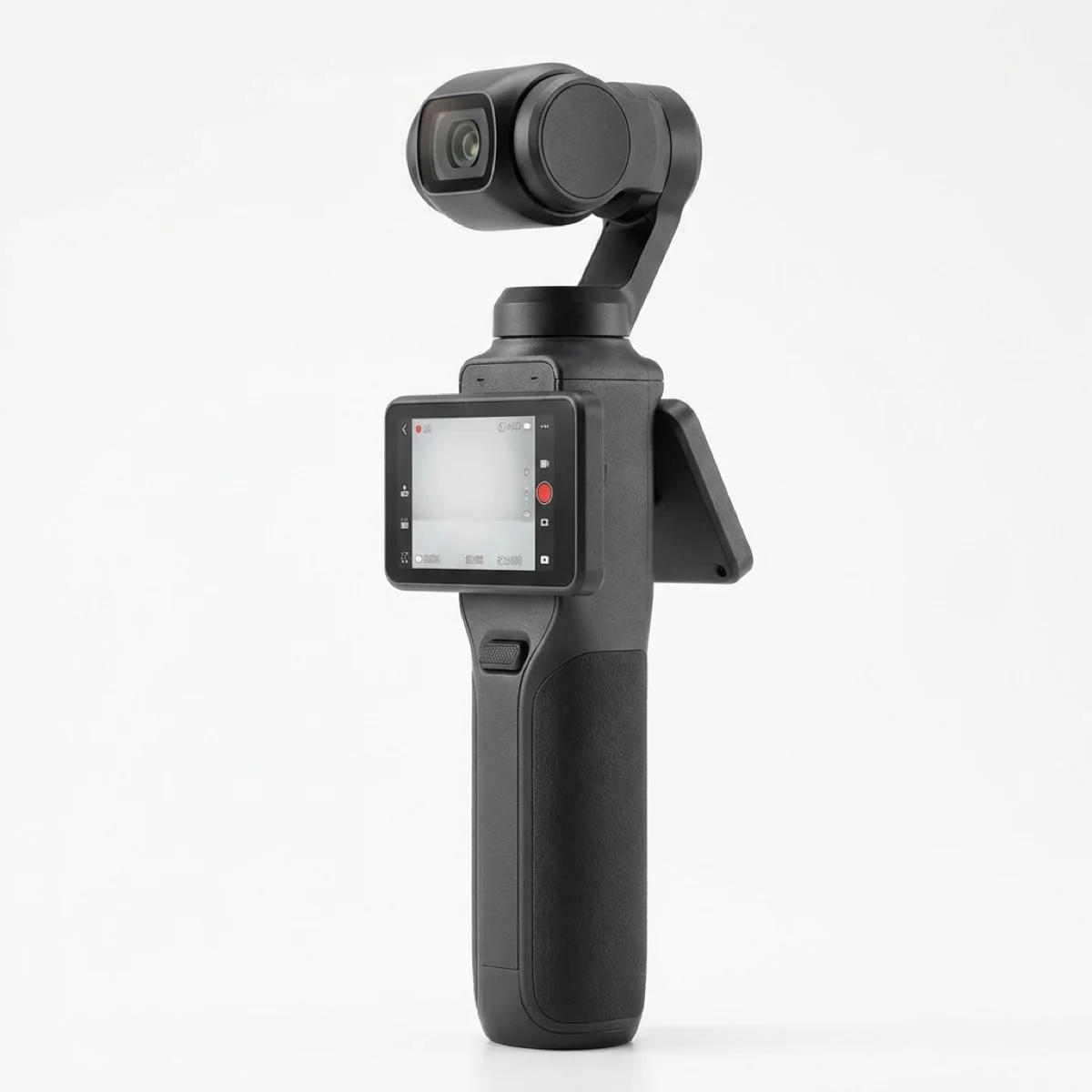
DJI Osmo Pocket 3 Review
The ultimate vlogging tool. A 1-inch sensor, mechanical stabilization, and a rotating screen that fits in your pocket.
📱 Ultra-Compact Creator 179g
Check Price on Amazon →
The Verdict
The DJI Osmo Pocket 3 is a masterpiece of engineering. It puts a massive 1-inch sensor into a tiny gimbal handle.
The low-light performance blows action cameras out of the water, and the mechanical gimbal is far smoother than electronic stabilization. The snappy rotatable screen makes vertical social content effortless.
What We Like
- Massive 1-inch sensor = great low light quality
- Mechanical gimbal is smoother than GoPro HyperSmooth
- Fastest startup: Flip screen, shoot in 2 seconds
- Face tracking is incredibly sticky
Trade-offs
- Not rugged or waterproof (needs a case)
- Built-in mic is good, but external mic is better for wind
- Fixed lens aperture means you need ND filters
- Non-removable battery limits all-day shooting
In-Depth Performance
Image Quality & 1-Inch Sensor
The jump to a 1-inch sensor transforms the Pocket 3 into a legitimate video tool. Low-light footage that would be unusable on phones or action cameras looks clean and professional here. The larger sensor captures approximately 2.5 stops more light than the Pocket 2, dramatically reducing noise in indoor and evening situations.
Color science is excellent—skin tones are natural and pleasing straight out of camera. D-Log M provides 10-bit footage with approximately 10 stops of dynamic range for color grading. The f/2.0 aperture and 20mm equivalent field of view are ideal for vlogging and content creation. 4K 120p slow motion is sharp and detailed, though at a slight crop.
Gimbal Stabilization
The 3-axis mechanical gimbal delivers stabilization that electronic systems cannot match. Walking footage is buttery smooth, panning is precise and controlled, and there's no rolling shutter warping. The gimbal motors are whisper-quiet—inaudible in recordings even with the built-in microphones.
ActiveTrack 6.0 provides exceptional subject tracking—the gimbal physically follows your subject while maintaining smooth, professional movements. Face tracking is remarkably sticky, keeping creators in frame during movement. The gimbal's range of motion handles most shooting scenarios, though extreme angles may require repositioning. The startup time of approximately 2 seconds (flip the screen, shoot) is unmatched.
Audio & Connectivity
Built-in stereo microphones are surprisingly capable for a device this small—audio quality exceeds most action cameras. Wind noise can be an issue outdoors, mitigated by the included wind cover. The real magic happens with DJI Mic 2 integration: wireless audio without a receiver, appearing as a clean track in recordings.
The 2.0" rotating touchscreen (700 nits brightness) enables instant switching between horizontal and vertical content—physically rotating the camera's orientation. The screen is readable in direct sunlight. USB-C connectivity enables fast charging (50% in 15 minutes) and direct webcam usage. Built-in WiFi and Bluetooth enable smartphone control via the DJI Mimo app.
Form Factor & Practicality
At 179 grams, the Pocket 3 truly fits in a pocket—something no stabilized camera has achieved before with a 1-inch sensor. The ergonomic handle provides a secure grip during one-handed operation. The magnetic mount system enables quick attachment to various accessories (tripods, extension rods, mounts).
Battery life of approximately 166 minutes (1080p 24fps) is respectable. The non-removable battery is a limitation for all-day shooting—pack a USB-C power bank or the optional battery handle. Build quality is solid but not ruggedized: the Pocket 3 is not waterproof or shockproof without accessories. Treat it as premium electronics, not an action camera.
Affiliate Disclosure
We buy our own gear or rent it. No manufacturers paid for this review. We earn a commission if you use our links, which keeps this site ad-free.
How It Compares
| Spec | DJI Pocket 3 ★ | DJI Pocket 2 | Sony ZV-1 II |
|---|---|---|---|
| Price | $519 | $349 | $898 |
| Sensor | 1" 9.4MP | 1/1.7" | 1" 20MP |
| Video | 4K120 | 4K60 | 4K30 |
| AF Points | PDAF | — | 315 points |
| Burst | — | — | — |
Recommended Accessories
Essential gear to maximize your DJI Osmo Pocket 3 experience:
Memory Card
SanDisk Extreme Pro 256GB microSD
V60 speeds for 4K120 and 10-bit recording.
Accessory
DJI Mic 2 Transmitter
Wireless audio directly to Pocket 3.
Mount
DJI Action Bike Mount
Handlebar mounting for cycling vlogs.
Filter
DJI Pocket 3 ND Filter Set
ND8/16/32/64 for cinematic outdoor video.
Frequently Asked Questions
For 80% of vloggers, yes. The gimbal stabilization is unbeatable, and the 1-inch sensor handles low light well. You lose some creative control (no interchangeable lenses, fixed aperture), but the convenience and footage quality are incredible. Keep a backup camera for specialty shots.
About 2 hours of continuous 4K30 recording. The battery is non-removable, so bring a USB-C power bank for all-day shooting. DJI sells a battery handle accessory that extends runtime to 4-5 hours. Fast charging via USB-C gives you 50% in 15 minutes.
Better than any action camera or phone, but not as good as full-frame cameras. The 1-inch sensor performs well up to ISO 3200. You'll see noise in dim restaurants or nighttime streets, but it's totally usable. The ActiveTrack works even in low light, which is impressive.
Many professionals use it as a B-camera for BTS (behind-the-scenes), quick social media content, or gimbal shots. The 10-bit D-Log M gives you good color grading flexibility. It won't replace an A7 IV for client work, but it's an excellent secondary tool that fits in your pocket.
Get the DJI Mic 2 for wireless audio—it integrates seamlessly. The wide-angle lens attachment adds creative options. A wrist strap is a must (the Pocket 3 is slippery). Consider the waterproof case if you shoot near water. Skip the ND filters unless you shoot in bright sunshine often.
Related Reviews

Written by cameraupick Editorial Team
Our team of professional photographers and videographers has 10+ years of experience testing cameras. We buy our own gear and provide honest, unbiased reviews.
Learn more about our testing process →