Sony A7S III Review
The A7S III trades resolution for light. Twelve megapixels sounds like a typo in 2026 until you read the rest of the spec sheet: 4K120 internally, 16-bit raw over HDMI and Dual Gain ISO modes.
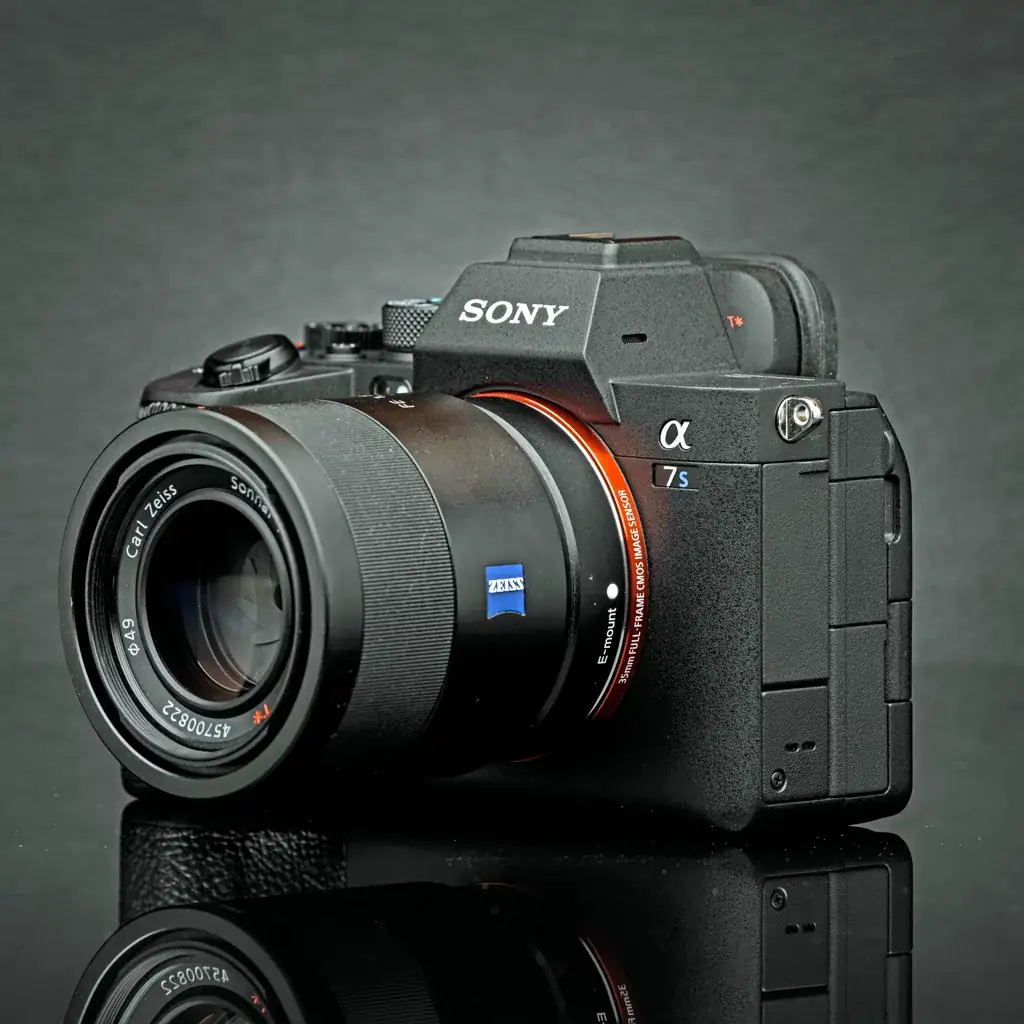
Disclosure: links to retailers on this page are affiliate links. We earn a commission on purchases made through them, at no extra cost to you. It doesn't change our verdicts.
The Verdict
Sony built this camera around one question: what if noise stopped being the limit? Twelve million pixels spread across a full 35.6 × 23.8 mm frame makes each photosite large, and the sensor runs Sony’s Dual Gain ISO design, with two amplification stages instead of one.
The cost is obvious. Twelve megapixels will not crop, will not print large, and will not satisfy anyone who shoots stills first. If your work is documentary, event or narrative video in uncontrolled light, that trade is the whole point. If you shoot photos and occasionally film, almost any other full-frame Sony is the better buy.
| Released | 23 October 2020 |
|---|---|
| Sensor | 12MP Exmor R BSI-CMOS, full frame (35.6 × 23.8 mm) |
| Resolution | 4,240 × 2,832 |
| Processor | BIONZ XR |
| Mount | Sony E |
| Stabilisation | 5-axis in-body sensor shift |
| Autofocus | 759-point phase detection |
| Burst | 10 fps |
| Shutter speeds | 30s to 1/8000s, bulb |
| Flash sync | 1/250s |
| ISO | 80–102,400, expandable 40–409,600; Dual Gain ISO modes |
| Video | XAVC S and XAVC HS; 4K up to 120 fps; Full HD up to 120 fps |
| Raw output | 16-bit raw over HDMI, up to 4.2K (4,264 × 2,408) at 60 fps |
| Viewfinder | 0.64-inch OLED, 9.44M dots (2,048 × 1,536 QXGA), 100% coverage |
| Rear screen | 3.0-inch vari-angle touchscreen, 1.44M dots |
| Card slots | 2 × dual-format: CFexpress Type A or SD UHS-II |
| Battery | NP-FZ100 |
| Connections | USB-C 3.2, HDMI Type-A, 3.5 mm audio jack |
| Wireless | Wi-Fi, Bluetooth 5.0 |
| Dimensions | 128.9 × 96.9 × 80.9 mm |
| Weight | 699 g with battery and card |
Maker-published figures, with source and date: Numbers & Sources below.
What We Like
- Cleanest high-ISO video of any full-frame hybrid
- 4K up to 120 fps and Full HD up to 120 fps
- 9.44M-dot EVF is still the best in class
- Fully articulating screen plus dual CFexpress A slots
Trade-offs
- 12MP is limiting for any serious stills work
- CFexpress Type A cards are expensive and slower than Type B
- No 6K or 8K option in 2026
- Rolling shutter is visible on fast pans
In Depth
What 12 megapixels buys
Spreading only 12 million pixels across a full 35.6 × 23.8 mm frame makes each one large, and large photosites gather more light before the signal has to be amplified. That is the whole argument for this camera. Sony adds Dual Gain ISO modes, which give the sensor a second clean starting point higher up the range rather than one that degrades steadily. Night exteriors come off the card usable instead of needing to be rescued.
The cost of that choice
4,240 × 2,832 is the whole file. It will not crop, it will not print large, and it will not survive a client asking for a tighter version. For documentary, event and narrative video in uncontrolled light that is irrelevant. For anyone who shoots stills first and films occasionally, almost every other full-frame Sony is the better buy — and that is not a close call.
Video formats
XAVC S and XAVC HS internally, with 4K up to 120 fps and Full HD up to 120 fps. Over HDMI the camera outputs 16-bit raw, up to 4.2K (4,264 × 2,408) at 60 fps, which is what you connect to an external recorder for grading headroom the internal codecs cannot match.
Autofocus
759 phase-detection points with real-time tracking. Face and eye detection holding through a profile turn matters far more in video than in stills, because there is no second chance at a take — a missed frame in a burst costs nothing, a missed second in an interview costs the interview.
The viewfinder
0.64 inches, 9.44 million dots at 2,048 × 1,536, 100% coverage. It remains one of the finest electronic viewfinders in any camera, and on a body whose sensor resolution is deliberately low, it is the component that tells you whether focus is actually where you put it.
Cards, power and handling
Two dual-format slots each take CFexpress Type A or SD UHS-II, so neither is the slow one — but Type A is a Sony-led format with fewer manufacturers and a higher cost per gigabyte than the Type B cards other flagships use. Power is the NP-FZ100. The body is 128.9 × 96.9 × 80.9 mm and 699 g ready to shoot, with a fully articulating screen that suits a camera pointed at yourself as often as away.
The numbers, and where they come from
Published by the maker
| Sensor size (maker's figure) | 35.6 x 23.8 mm |
|---|---|
| Effective pixels | 12.1 MP |
| Pixel dimensions (3:2) | 4,240 x 2,832 |
| Continuous shooting | 10 fps (Hi+ drive mode) |
| Battery (CIPA) | 600 shots |
| Weight with battery and card | 699 g |
| Viewfinder resolution | 9.44 million dots |
Maker figures checked on 25 Sept 2026 — maker's spec sheet. Continuous shooting, in the maker's words: Continuous shooting: Hi+: 10 fps, Hi: 8 fps, Mid: 6 fps, Lo: 3 fps
Computed from those figures
| Pixel pitch | 8.4 µm |
|---|---|
| Sensor area | 847 mm² |
| Format factor | 1.01x |
| Light gathered vs 35mm | the same |
| Print at 300 dpi | 36 cm |
| Diffraction limit | f/12.5 |
Computed from the figures above. Pixel pitch = sensor width / pixel count across. Light gathered = log2 of the area ratio to 36 x 24 mm. Diffraction limit = the aperture at which the Airy disc diameter (2.44 x lambda x N, lambda = 550 nm) reaches two pixel pitches. Other calculators use other thresholds and so quote other numbers.
How this score is put together
8.4 out of 10
- Image quality Weight 25% 7.6
12.1MP at 4240 x 2832 — 8.4 µm pitch buys low light, not detail
- Autofocus Weight 20% 8.8
759-point phase detect
- Video Weight 20% 9.4
4K120 10-bit 4:2:2 internal
- Speed Weight 15% 7.4
10 fps, not what this body is for
- Handling and build Weight 20% 8.7
9.44M-dot EVF, CFexpress A plus SD
Scored against full-frame interchangeable-lens cameras. The overall figure is the weighted mean of the rows above — it is computed, not set by hand.
How It Compares
| Spec | Sony A7S III | Sony FX3 | Panasonic S5 IIX |
|---|---|---|---|
| Sensor | 12MP FF BSI | 12MP FF BSI | 24.2MP FF |
| Video | 4K120 10-bit | 4K120 | 6K30 |
| AF Points | 759 points | 627 points | 779 points PDAF |
| Burst | 10 fps | 10 fps | 30 fps |
| IBIS | 5-axis | 5.5 stops | 5 stops |
| Buy | Check price | No link available | Check price |
Recommended Accessories
Essential gear to maximize your Sony A7S III experience:
Sony CFexpress Type A 160GB
Required for All-Intra and 4K120 recording.
Sony NP-FZ100
A spare covers a full shooting day of video.
RODE Wireless Micro
Clip-on audio for interviews and run-and-gun.
Ulanzi VL49 RGB
Pocket fill light for indoor and night work.
More gear guides: Best TripodsBest Camera BagsBest SD Cards
FAQ
Is 12MP really enough?
For video, yes — 4K is 8.3MP. For stills it depends entirely on whether you crop. If you never crop and deliver digitally, 12MP is fine. If you crop, buy something else.
A7S III or FX3?
Same sensor and processor. The FX3 drops the EVF and adds a fan, XLR handle and cage mounts. If you shoot handheld with an eye to the viewfinder, take the A7S III.
Does it overheat?
Continuous 4K60 recording is the design target and it holds. 4K120 for long stretches is where heat becomes the limit.