Bigger sensor, better photos. These full-frame bodies deliver superb low-light performance, rich dynamic
range, and that signature shallow depth of field—ranked for value, resolution, and portability.
Disclosure: As an Amazon Associate I earn from qualifying purchases. Links to retailers on this page are affiliate links. We earn a commission on purchases made through them, at no extra cost to you. It doesn't change our verdicts.
Spec figures from the makers: Sony A7 IV (sony.co.uk, checked 25 Sept 2026) · Canon R6 Mark II (canon-europe.com, checked 25 Sept 2026) · Nikon Z6 III (nikonusa.com, checked 25 Sept 2026) · Canon R8 (canon-europe.com, checked 25 Sept 2026) · Canon R8 Mark II (canon-europe.com, checked 16 Oct 2026) · Sony A7C II (sony.co.uk, checked 25 Sept 2026) · Sony A7 V (helpguide.sony.net, checked 26 Sept 2026) · Canon R5 Mark II (canon-europe.com, checked 25 Sept 2026) · Nikon Z8 (nikonusa.com, checked 25 Sept 2026) · Sony A7R VI (helpguide.sony.net, checked 16 Oct 2026)
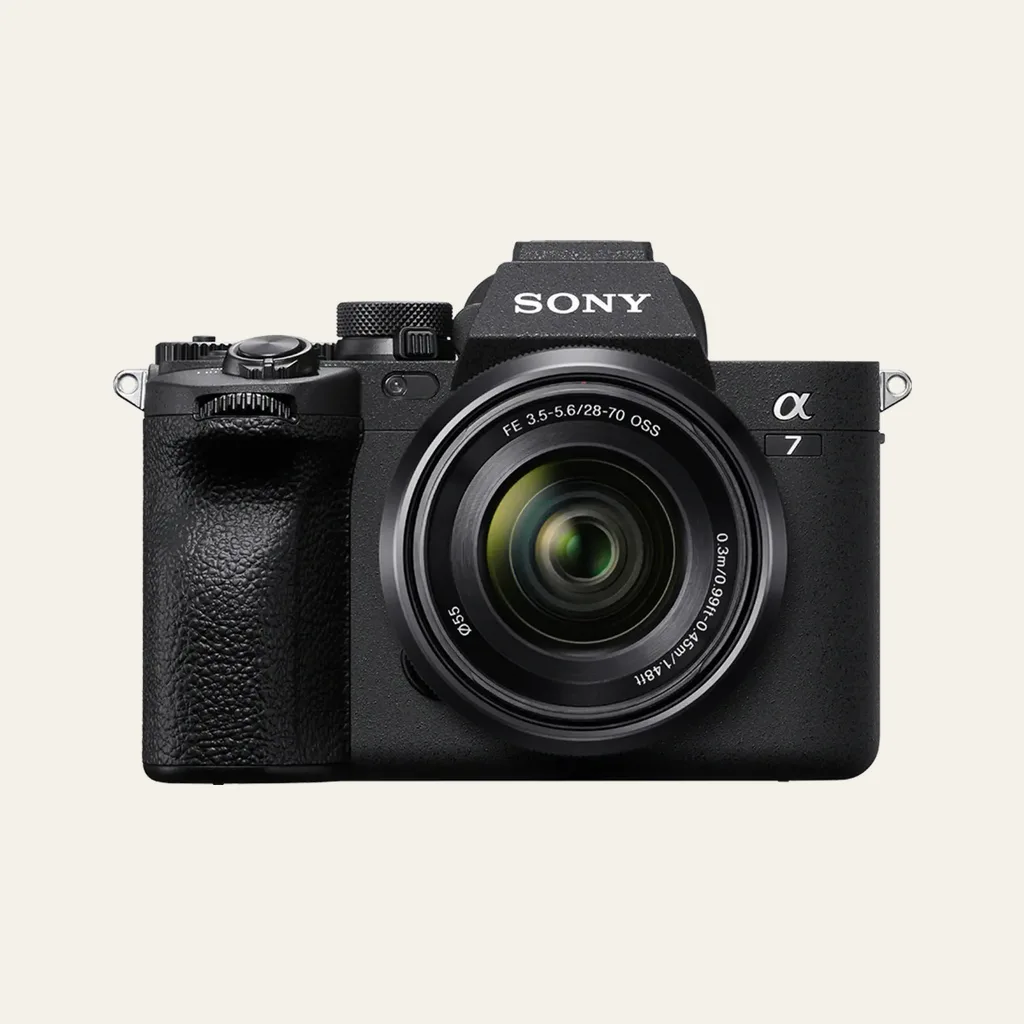
The A7 IV defines the modern full-frame standard. Its 33MP sensor offers significantly more cropping
room than its 24MP rivals, and the autofocus is legendary—it tracks eyes like a magnet.
With dual card slots, a deep grip, and the largest third-party lens ecosystem (Sigma, Tamron, Samyang),
it's the workhorse choice for anyone building a serious full-frame system.
Need speed? The R6 Mark II shoots a blistering 40 frames per second electronically, making it a monster
for sports and wildlife. Its 24MP sensor is optimized for responsiveness rather than resolution.
The ergonomics are fantastic, the weather sealing is robust, and Dual Pixel CMOS AF II sticks to subjects
tenaciously with deep-learning recognition for people, animals, and vehicles.
The R8 is a wolf in sheep's clothing. It packs the same powerful sensor and autofocus system as the
pro-level R6 Mark II but stuffs it into a tiny, lightweight body—the lightest full-frame on the market.
It's the easiest path to that "professional look" without carrying heavy gear. The only real compromises
are the smaller battery and the lack of IBIS, but for travel and portraits it's unbeatable value.
The Mark II keeps the R8's 24.2 megapixels and 1,053-zone Dual Pixel CMOS AF II and adds what the R8
never had: sensor-shift stabilisation. Canon rates it at up to 7.5 stops in the centre, measured to CIPA
2024 together with the stabilised RF 24-105mm F2.8 L IS USM Z; it gives no figure for the body alone.
Canon also lists the body, mainly magnesium alloy, as dust- and water-resistant, and the 40 fps buffer
grows to 73 RAW frames with 20 frames of pre-capture. What stays is one SD slot and a short battery
rating: 340 shots on the screen, 220 through the viewfinder, already in power-saving mode. Canon Germany
gives 20 October 2026 as the availability date.
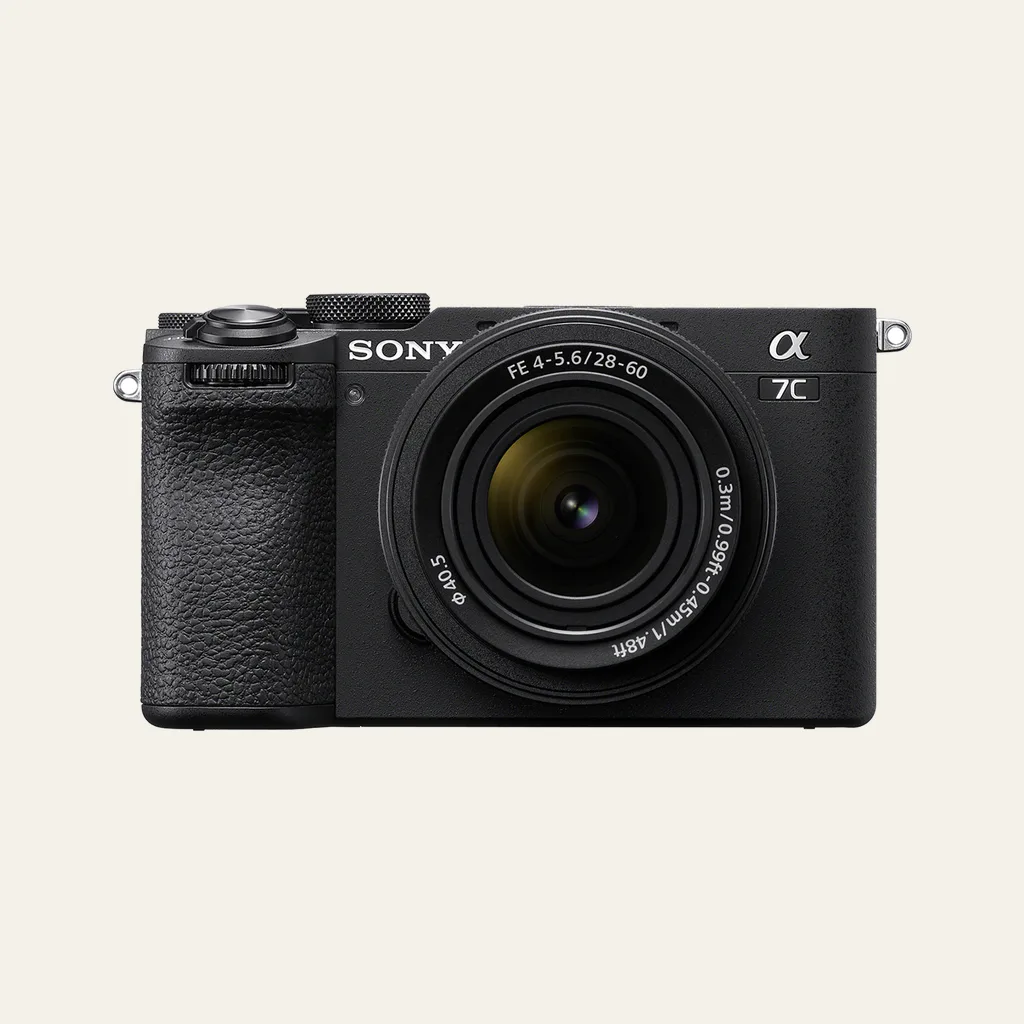
The A7C II is a marvel of engineering, squeezing the powerful A7 IV into a body barely larger than an
APS-C camera. It's the dream camera for travel photographers who demand full-frame quality without the bulk.
With Sony's latest AI autofocus chip, it tracks subjects with uncanny accuracy. For vloggers and hybrid
shooters, the 10-bit video and 33MP stills cover almost every scenario in a remarkably small package.
If resolution decides, this is the body with the most of it in this guide: 66.8 megapixels, 9,984 × 6,656
pixels, from a 35.9 × 24.0 mm sensor. Sony also gave it the speed the A7R V lacked: 30 fps with the
electronic shutter, with a buffer of 150 compressed RAW frames on a CFexpress Type A card.
Each headline figure has a condition. 30 fps applies to compressed RAW only; lossless and HQ RAW stop at
15 fps. 8K30 is recorded internally but with a narrower angle of view, for which Sony gives no crop factor.
In-body stabilisation is rated at 8.5 stops at the centre (CIPA 2024, with the FE 50mm F1.2 GM), and both
card slots take CFexpress Type A or SD.
30 fps with a 150-frame compressed RAW buffer (Sony, CFexpress Type A)
8.5 stops of in-body stabilisation at the centre (CIPA 2024)
Two slots, each for CFexpress Type A or SD
Cons
30 fps only in compressed RAW; lossless and HQ RAW stop at 15 fps
8K records a narrower angle of view, with no crop factor published
Uses the NP-SA100, not the A7R V's NP-FZ100
Full-Frame Buying Advice
Resolution vs. Speed
More megapixels (Sony A7R VI at 66.8MP, Canon R5 II at 45MP) means bigger prints and heavy cropping room,
but larger files. 24MP bodies like the R6 Mark II shoot faster and handle low light beautifully. Note that
a higher model number does not mean more pixels: the Sony A7 V has the same 33MP as the A7 IV and spends
its generation on speed instead. Match the sensor to how you actually shoot, not the spec sheet.
The Lens Ecosystem
If you choose Sony, you get cheap, abundant third-party lenses. Canon and Nikon offer brilliant proprietary
glass but fewer budget options. Choose the system you'll grow into, not just the body.
For most enthusiasts, yes—if you shoot low light, portraits, or want maximum dynamic range. Full-frame sensors gather more light, deliver shallower background blur, and hold detail in shadows better. But APS-C is lighter and cheaper, and bodies like the Canon EOS R8 now bring full-frame quality to near-APS-C pricing. Choose full-frame for image quality; choose APS-C for budget and portability.
What's the best full-frame camera for the money in 2026?
The Sony A7 IV is the best all-round value with its 33MP sensor, dual card slots, and class-leading autofocus. If you want full-frame for less, the Canon EOS R8 packs the same sensor and AF as the R6 Mark II into a tiny body for far less money. The Sony A7C II splits the difference—33MP in the smallest full-frame body available.
Which full-frame camera has the best autofocus?
Sony's Real-time Tracking on the A7 IV and A7C II is uncannily sticky for eyes and faces, and Sony lists recognition of people, animals, birds, insects, vehicles and aircraft for the A7R VI. Canon's Dual Pixel CMOS AF II on the R6 Mark II and R8 is just as reliable, with deep-learning subject recognition for people, animals, and vehicles; the R8 Mark II keeps the R8's 1,053-zone version of it, rated by Canon down to EV -7.5 with an f/1.2 lens. Nikon's Z6 III closed the gap and now competes directly.
Do I need a full-frame camera for video?
Not necessarily—but full-frame helps. A larger sensor gives a more cinematic look and cleaner low-light footage. The Canon R6 Mark II shoots 4K60 with the full sensor width (no crop), while the Sony A7 IV applies a crop in 4K60. If video is your main focus, see our dedicated Best Full-Frame for Video guide for a video-first ranking.
We buy or rent our own equipment. No manufacturer paid for this guide. We earn a commission when you use our
affiliate links, which keeps this site ad-free.
Stay in the Loop
New reviews, deals, and buying guides — straight to your inbox.
We use Google Analytics to understand which articles get read. It sets cookies and only runs with your consent. The site itself works either way. Privacy policy