
Autofocus is King
Solo creators need reliable face/eye tracking. If you're moving around while talking, the camera must keep you sharp automatically. Sony and Canon lead here.
Great YouTube content requires cameras that excel at autofocus, audio, and stabilization. Here are the best picks for solo creators, organized by budget.

Disclosure: As an Amazon Associate I earn from qualifying purchases. Links to retailers on this page are affiliate links. We earn a commission on purchases made through them, at no extra cost to you. It doesn't change our verdicts.
 Best Overall Sony ZV-E10 II Check price at Amazon
 Easiest to Use Canon EOS R50 Check price at Amazon
 Best for Video Canon EOS R50 V Check price at Amazon
 Best Value Panasonic S5 II Check price at Amazon
 Also Great Sony A6700 Check price at Amazon
 Best Pro Pick Sony ZV-E1 Check price at Amazon
 Best on a Budget Canon EOS R100 Check price at Amazon
 Best Compact DJI Osmo Pocket 4 Check price at Amazon
 Also Great Nikon Z30 Check price at Amazon
| Model | Type | Best For | Max Quality | Price |
|---|---|---|---|---|
| Sony ZV-E10 II | APS-C | Most Creators | 4K60 | Check price at Amazon |
| Canon EOS R50 | APS-C | Beginners | 4K30 | Check price at Amazon |
| Canon EOS R50 V | APS-C | 10-bit Video, Canon | 4K30 from 6K | Check price at Amazon |
| Panasonic S5 II | Full-Frame | Pro Creators | 6K30 / 4K60 | Check price at Amazon |
| Sony A6700 | APS-C Premium | Hybrid Creators | 4K120 | Check price at Amazon |
| Sony ZV-E1 | Full-Frame | Low-light King | 4K60 10-bit | Check price at Amazon |
| Canon EOS R100 | APS-C | Ultra Budget | 4K24 | Check price at Amazon |
| DJI Osmo Pocket 4 | Gimbal | Run & Gun | 4K60 (4K240 slow-mo) | Check price at Amazon |
| Nikon Z30 | APS-C | Budget Value | 4K30 | Check price at Amazon |
Spec figures from the makers: Sony ZV-E10 II (helpguide.sony.net, checked 26 Sept 2026) · Canon EOS R50 (canon-europe.com, checked 25 Sept 2026) · Canon EOS R50 V (canon-europe.com, checked 16 Oct 2026) · Panasonic S5 II (help.na.panasonic.com, checked 26 Sept 2026) · Sony A6700 (sony.co.uk, checked 25 Sept 2026) · Sony ZV-E1 (sony.co.uk, checked 25 Sept 2026) · Canon EOS R100 (canon-europe.com, checked 25 Sept 2026) · Nikon Z30 (nikonusa.com, checked 25 Sept 2026)

The ZV-E10 II is designed specifically for content creators. It has dedicated vlogging features like Product Showcase mode (instant focus switch when you hold something up), Background Defocus button, and a fully articulating screen.
The AI-powered autofocus tracks faces and eyes incredibly well—even when you're walking around. 4K 60p video, 10-bit color, and S-Log3 for color grading make it professional-grade.

Canon's most beginner-friendly mirrorless camera. The menu system is intuitive, the touchscreen is responsive, and Dual Pixel autofocus makes keeping you in focus effortless.
It's the best entry point to Canon's RF lens ecosystem. 4K video, excellent stills, and a compact, lightweight body that's comfortable for all-day shooting.

The video-first version of the R50 above: the same 24.2MP APS-C resolution, but 10-bit 4:2:2 recording with Canon Log 3, HLG and PQ, and full-width 4K at 30p and below, oversampled from 6K. Next to the microphone input there is a headphone output, so you can check your audio while recording.
For a desk or tripod setup, the missing viewfinder hardly matters. What can matter is in Canon's spec sheet: no in-body stabilisation (lens IS and digital IS only), and 4K at 59.94p and 50p is cropped, by an amount Canon's spec page does not state.
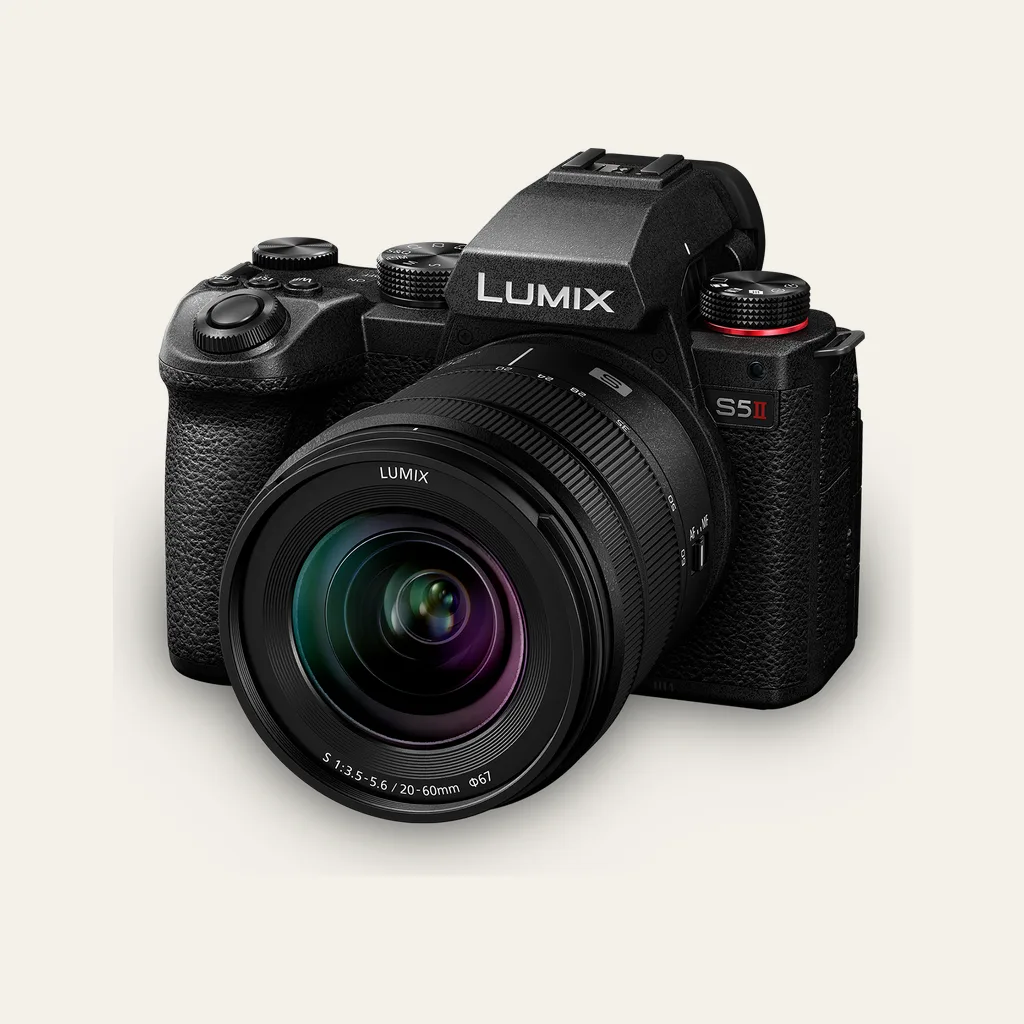
The S5 II is a game-changer for YouTube creators who want full-frame quality without Sony prices. It has Phase-Detect autofocus (finally!) that tracks faces reliably.
Incredible video specs: 6K 30p, 4K 60p in the APS-C crop mode (full-frame 4K goes to 30p), and V-Log for professional color grading. Panasonic names one recording stop: 30 minutes in 6K and 5.9K at 30p/25p with Thermal Management on Standard. The IBIS is outstanding for handheld work.
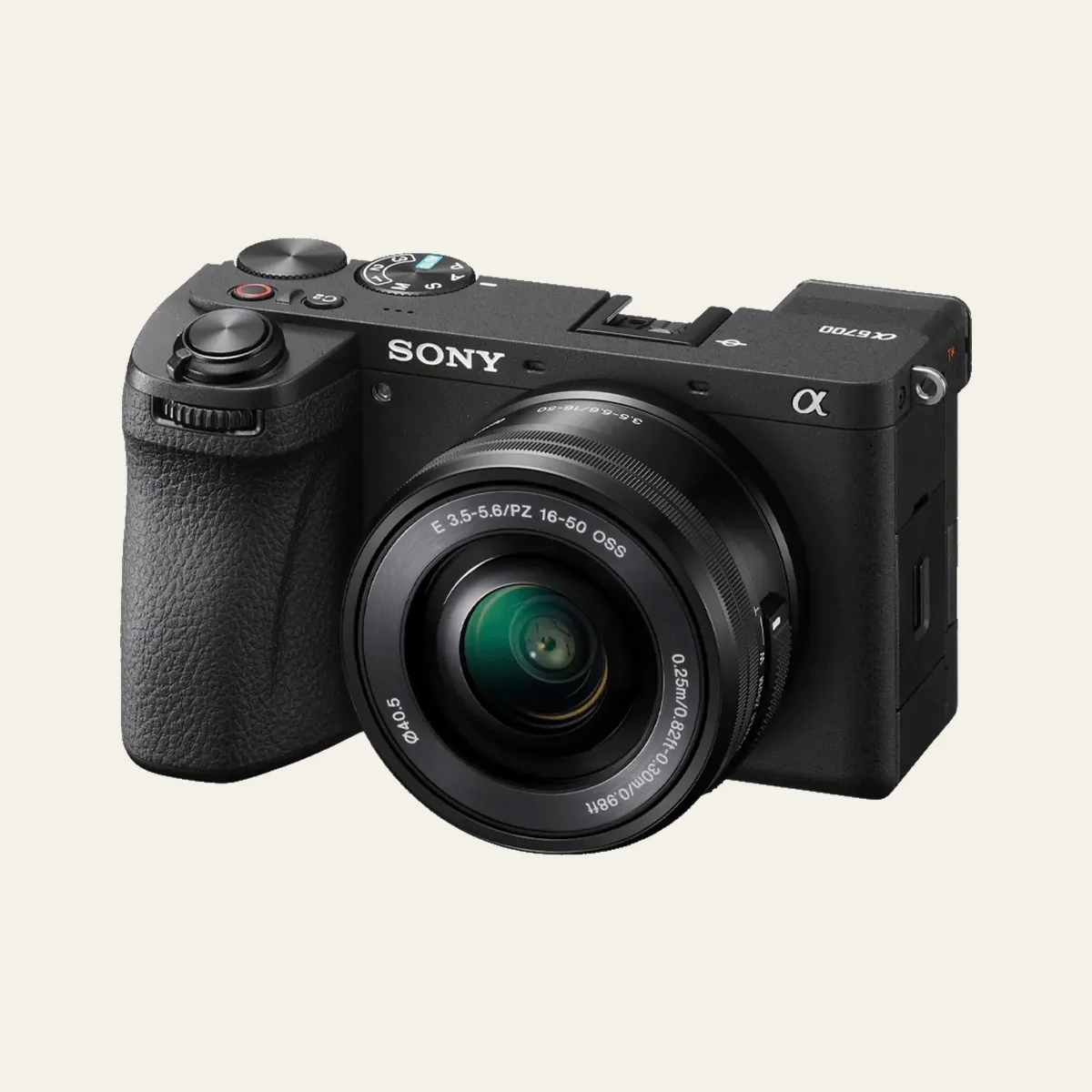
The A6700 is Sony's most advanced APS-C camera ever. It combines the AI-powered autofocus from the A7R V with a compact, lightweight body. 4K 120fps for buttery slow-motion, 5-axis IBIS, and 10-bit 4:2:2 internal recording.
Perfect for creators who want flagship features without full-frame bulk or cost. The 26MP sensor delivers excellent stills too—a true hybrid workhorse.

Full-frame vlogging beast. The 12MP sensor trades resolution for insane low-light performance—usable footage at ISO 51,200. Perfect for creators who shoot indoors, at night, or in restaurants.
AI-powered Auto Framing follows you around the room without a cameraman. The same sensor as the FX3 cinema camera, for a fraction of the outlay.

The cheapest way into Canon's RF ecosystem. It is a genuine mirrorless camera with a viewfinder, 4K video, and Canon's reliable autofocus. Same sensor as much pricier Canon bodies.
Stripped down for simplicity: no flip screen, no touch, but excellent image quality and Canon's famous skin tones. Great for creators on a tight budget.

A three-axis mechanical gimbal you can fit in your pocket. The Pocket 4 keeps the Pocket 3's 1-inch sensor size and 20 mm f/2.0 lens and, on DJI's sheet, adds 4K slow motion at up to 240 fps, up to 180 Mbps, 107 GB of built-in storage and a rated 240 minutes per charge (1080p/24, Wi-Fi and screen off).
It suits travel, events and creators who would rather not set up a tripod. If you film other people more than yourself, the DJI Osmo Pocket 4P adds a 60 mm f/1.8 tele camera on the same gimbal, at 230 g instead of 190.5 g and with 210 instead of 240 rated minutes.

Nikon's purpose-built vlog camera, in the same price range as the ZV-E10 but with Nikon's famous natural color science. Flattering skin tones right out of the box.
Vari-angle screen, red tally light, and excellent face tracking. Great entry to the Z-mount ecosystem with upgrade paths to Z50, Z fc, or full-frame.
Solo creators need reliable face/eye tracking. If you're moving around while talking, the camera must keep you sharp automatically. Sony and Canon lead here.
Viewers tolerate bad video but click away from bad audio instantly. Get a camera with a mic input, and invest in a proper microphone early.
Modern smartphones (iPhone 15 Pro, Samsung S24) produce excellent video quality. Upgrade to a dedicated camera when you need: (1) Better autofocus for moving subjects, (2) Interchangeable lenses for creative control, (3) Superior low-light performance, or (4) Professional audio inputs. If you're just starting, use your phone and invest in lighting and audio first.
For YouTube, 4K 30p is the sweet spot. It looks sharp on modern displays and is easy to edit. 4K 60p is useful if you create slow-motion content or want extra-smooth motion. Most viewers won't notice the difference between 30p and 60p for talking-head content. Prioritize good autofocus and stabilization over chasing higher frame rates.
APS-C is sufficient for 95% of YouTubers. Full-frame advantages include better low-light performance, shallower depth of field for cinematic look, and wider field of view with same lens. But full-frame cameras and lenses cost significantly more. Start with APS-C (Sony ZV-E10 II, Canon R50) and upgrade to full-frame (Canon R8, Sony ZV-E1) when low-light or aesthetic becomes limiting.
Canon EOS R100 is the best true interchangeable lens camera under €500. It has reliable autofocus, 4K video, and access to Canon's RF lens ecosystem. For slightly more, consider the used Sony ZV-E10 (Gen 1).

We buy or rent our own equipment. No manufacturer paid for this guide. We earn a commission when you use our affiliate links, which keeps this site ad-free.