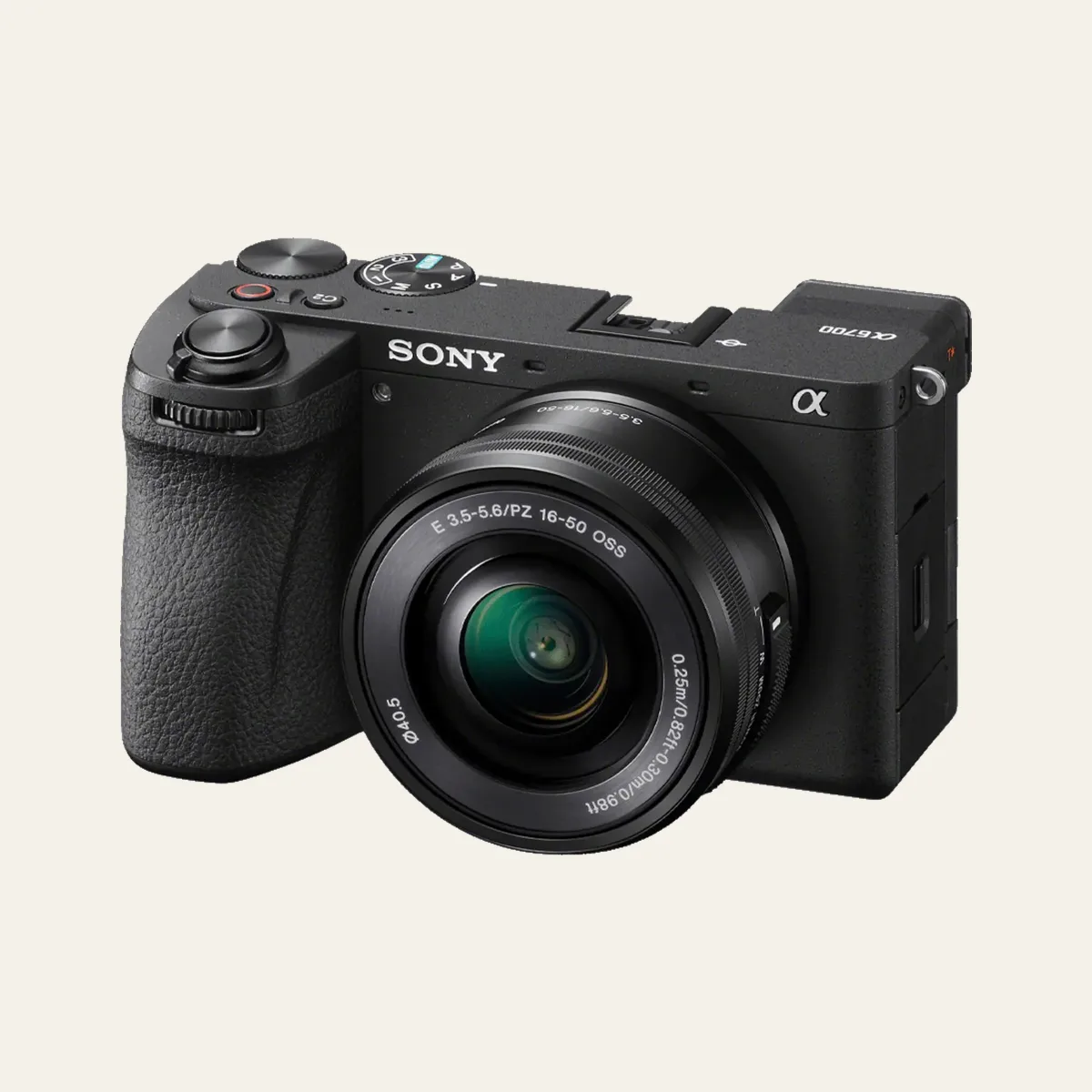
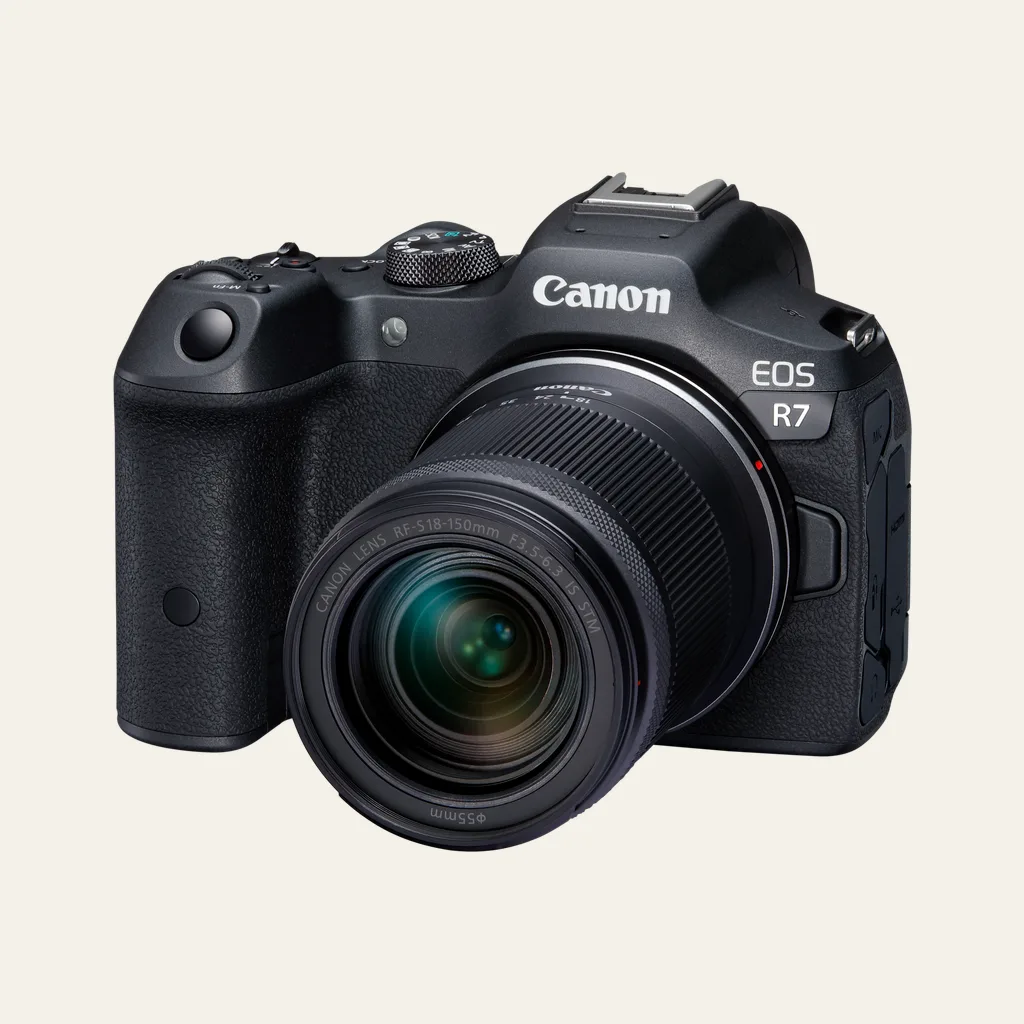
Two cross-brand APS-C enthusiast bodies go head-to-head. We compare
autofocus, video, resolution, burst speed, and the reach that
decides which one belongs in your bag.
Updated: October 2026
Disclosure: As an Amazon Associate I earn from qualifying purchases. Links to retailers on this page are affiliate links. We earn a commission on purchases made through them, at no extra cost to you. It doesn't change our verdicts.
Quick Verdict
Best for Video & AI Autofocus
Sony A6700
Choose if: You want the most reliable AI autofocus,
4K120 slow-motion, the lower price, and a compact hybrid body. Best
for run-and-gun video, vlogging, and hybrid shooters.
Choose if: You want the highest resolution, 15fps
mechanical / 30fps electronic burst, and more cropping reach. Best
for wildlife, sports, and birds-in-flight photographers.
Spec figures from the makers: Sony A6700 (sony.co.uk, checked 25 Sept 2026) · Canon EOS R7 (canon-europe.com, checked 25 Sept 2026)
Autofocus: Head-to-Head
Both have flagship-grade autofocus, but they take different routes —
Sony leans on a dedicated AI unit, Canon on proven Dual Pixel:
Sony A6700
759 phase-detect points, 94% coverage
Dedicated AI unit detects humans, animals, birds, insects, vehicles
Sticky predictive tracking inherited from the A7R V
11fps caps sustained action below the R7
Canon EOS R7
Dual Pixel CMOS AF II with 651 zones (5,915 positions)
Class-leading tracking for erratic wildlife movement
15fps mechanical sustains the action longer
People, animal, and vehicle subject detection
Winner: Slight edge to the Canon R7 for sustained
wildlife and sports thanks to 15fps and superior AF tracking; the
A6700's AI unit remains exceptional for video and mixed subjects.
Video Quality
This is the A6700's clearest advantage — it is the stronger hybrid:
Sony A6700
4K60 from a 6K oversample — extremely sharp
4K120 for true high-frame-rate slow motion (1.58x crop)
10-bit 4:2:2 internal with S-Log3 and S-Cinetone
Continuous 4K60, per Sony: approx. 5 min on [Auto Power OFF Temp.] Standard, 30 min on High (25 °C; XAVC S 150M 8-bit, Wi-Fi off, monitor open, camera off for a while beforehand)
Canon EOS R7
4K60 full-width with no crop — unusual for APS-C
4K30 oversampled from 7K for exceptional detail
10-bit 4:2:2 internal with C-Log 3 and 12+ stops DR
No 4K120; Canon's heat table has no uncropped 4K60 row
Winner: Sony A6700. 4K120 slow motion and oversampled
4K60 make it the better all-round video tool.
Resolution & Reach
This is the R7's standout strength for distant subjects:
R7: 32.5MP — the highest of any current APS-C
camera, with files that crop superbly for wildlife composition
A6700: 26MP — a balanced resolution that keeps
low-light noise lower but gives you less cropping headroom
Winner: Canon R7. More megapixels on the same sensor
size means more effective reach when you can't get closer.
Handling, Reliability & Battery
Both are weather-sealed, but trade off differently:
Sony A6700
Compact, lightweight magnesium-alloy body at 493g
Single SD UHS-II slot
Modest ~570-shot battery — carry spares
Canon EOS R7
Larger LP-E6NH battery rated ~770 shots
Deeper DSLR-style grip and dual SD UHS-II slots
Heavier at 612g; unusual rear control-dial placement
Winner: Split decision. The R7 wins on battery life
and grip; the A6700 wins on compact size and weight.
This page contains affiliate links. If you purchase through our links,
we may earn a small commission at no extra cost to you. This helps
support our independent testing.
We use Google Analytics to understand which articles get read. It sets cookies and only runs with your consent. The site itself works either way. Privacy policy