
Canon EOS R6 Mark III Review
A 32.5 MP full-frame hybrid: up to 40 fps with the electronic shutter, pre-continuous shooting, internal 7K 60p RAW video, and two card slots (one CFexpress Type B, one SD UHS-II).

Disclosure: As an Amazon Associate I earn from qualifying purchases. Links to retailers on this page are affiliate links. We earn a commission on purchases made through them, at no extra cost to you. It doesn't change our verdicts.
The Verdict
A 32.5 MP full-frame body with Dual Pixel CMOS AF II and 1,053 AF zones, up to 40 fps with the electronic shutter and 12 fps with the mechanical shutter, pre-continuous shooting that also saves frames from before the shutter button is fully pressed, and internal 7K 60p RAW video.
The sensor records 6960 x 4640 pixels; the R6 II's 24.2 MP sensor records 6000 x 4000. Canon rates the IBIS at 8.5 stops at the centre and 7.5 stops at the edges. Owners say the autofocus locks on and stays with the subject; some report it missing or losing the subject at times (see What owners report).
- Overall
- 9.1/10
- Image quality
- 8.8
- Autofocus
- 9.3
- Video
- 9.5
- Speed
- 9.2
- Handling and build
- 9.0
| Imaging | |
|---|---|
| Sensor | 32.5MP full-frame CMOS (35.9 x 23.9 mm) |
| Processor | DIGIC X + DIGIC Accelerator |
| Stabilization | 5-Axis IBIS (8.5 stops with IS lenses) |
| ISO Range | 100-64,000 (exp. 50 / 102,400) |
| Autofocus | |
| AF Points | 1,053 Zones (Dual Pixel CMOS AF II) |
| AF System | Deep Learning AF (People/Animal/Vehicle Priority) |
| Burst Speed | 40 fps (Electronic), 12 fps (Mechanical) |
| Pre-Shoot | 0.5 sec Pre-Continuous (20 frames) |
| Video | |
| Max Resolution | 7K 60p RAW (6960 x 3672) / 4K 120p / 1080p 180p |
| Internal Rec | 10-bit 4:2:2 C-Log 3, XF-AVC |
| Profiles | Canon Log 2, Canon Log 3 |
| Video Features | False Color, Waveform, Zebras, Focus Guide |
| Build & Connectivity | |
| Viewfinder | 3.69M-dot OLED, 0.76x magnification, up to 120fps |
| Screen | Vari-angle touchscreen |
| Card Slots | 1x CFexpress Type B + 1x SD UHS-II |
| Ports | USB-C 3.2, full-size HDMI (Type A), 3.5mm Mic/Headphone |
| Weather Sealing | Magnesium alloy, dust and moisture resistant |
| Weight | 609g body only, 699g with card and battery |
Maker-published figures, with source and date: Numbers & Sources below.
What We Like
- 40 fps electronic, 12 fps mechanical burst
- Pre-continuous shooting, which owners single out (see What owners report)
- 7K 60p RAW internal recording
- In-body stabilisation rated at up to 8.5 stops at the centre
- Two card slots (CFexpress Type B + SD UHS-II) and full-size HDMI (Type A)
- Clean high-ISO images and room to crop, owners say (see What owners report)
Trade-offs
- 32.5 MP; the R5 II has 45 MP
- Canon rates the battery at about 620 shots with the screen; the R6 II at 760
- Some owners find the menus and settings complex and hard to learn (see What owners report)
- Some owners report the autofocus missing or losing the subject at times (see What owners report)
- Some owners report overheating, in video and while photographing a wedding (see What owners report)
In-Depth Performance
Image Quality & Sensor Performance
The sensor is a 32.5MP full-frame CMOS measuring 35.9 x 23.9 mm. At 6960 x 4640 the pixel pitch works out to 5.16 µm; the R5 II's 8192 x 5464 pixels on 36 x 24 mm work out to 4.39 µm. Canon quotes 12 fps with the mechanical shutter and 40 fps with the electronic one. For photos other people took with it, see Sample photos.
Canon's native range runs ISO 100-64,000, expandable to 102,400. At 6960 px wide, a 300 dpi print comes out 59 cm on the long edge. Owners say high-ISO images in low light come out clean, that the files hold detail they can recover in the shadows and the highlights, and that the higher resolution gives them more room to crop (see What owners report).
Autofocus System
The R6 III uses Canon's Dual Pixel CMOS AF II with 1,053 AF zones. Subject detection covers humans (face/eye/body), animals, birds and vehicles; the camera can switch between detection types automatically, or you can set one subject type.
The pre-continuous shooting mode saves 20 frames (0.5 seconds) from before the shutter button is fully pressed. Canon rates low-light AF down to -6.5 EV. Owners say the autofocus locks on and stays with the subject; some report it missing or losing the subject at times (see What owners report).
Video Capabilities
Internal RAW is 6960 x 3672 at up to 59.94 fps — 7K wide, open-gate 3:2 RAW at 6960 x 4640 up to 29.97 fps. 4K is oversampled from the full sensor width, and the R6 III also records 4K at up to 120p. Canon Log 2 and Log 3 are both available; Canon's own figure for Log 2 is 15+ stops. Besides RAW, internal recording includes 10-bit 4:2:2.
From a cold start at 23 °C, Canon lists no heat limit for standard 4K DCI 60p, about 23 minutes for 4K DCI Fine 60p and for RAW 60p with a 2K proxy, and about 28 minutes for 4K DCI 120p (35 with the auto power-off temperature set to High). Some owners report the camera overheating, in video and while photographing a wedding (see What owners report). Video assists include false colour, waveform, zebras and a focus guide. The HDMI port is full-size (Type A).
Ergonomics & Build
AF points can be selected with a multi-controller joystick. The EVF is a 0.5-inch OLED with 3.69 million dots, refreshing at up to 120 fps, and the rear screen is a vari-angle touchscreen. Some owners find the menus and settings complex and hard to learn (see What owners report).
Canon rates the supplied LP-E6P at about 620 shots per charge on the screen (390 through the viewfinder). It has two card slots: one CFexpress Type B and one SD UHS-II. The camera can be charged and powered over USB-C. The multi-function shoe supports Canon accessories and wireless transmitters.
Sample photos from other photographers
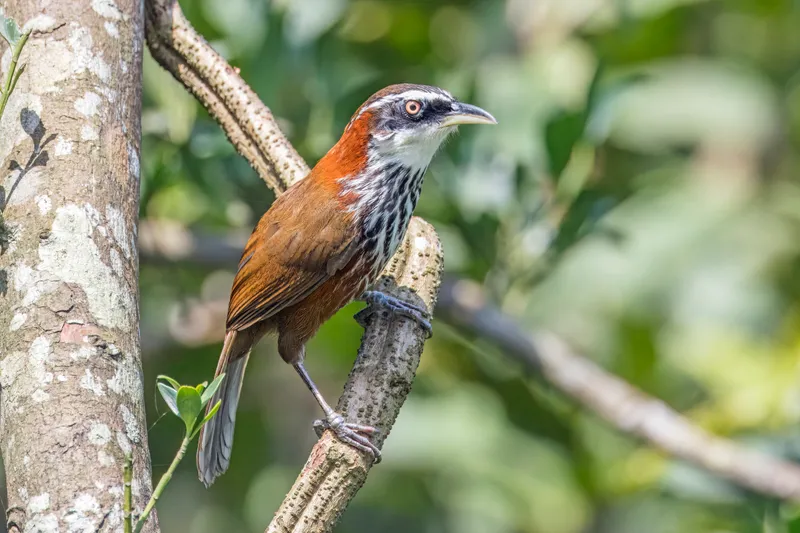
Photos that other people took with the Canon R6 III and published on Wikimedia Commons under free licences. We chose them; we did not take them. The settings under each photo come from the file's own metadata.
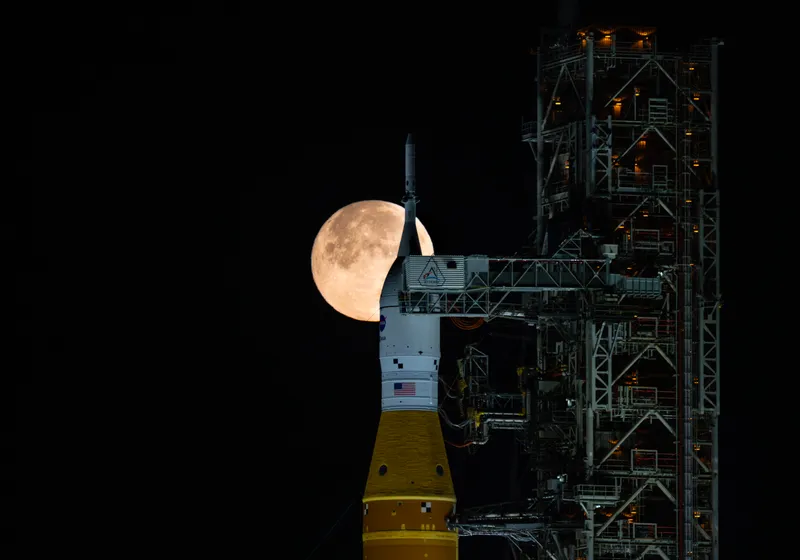
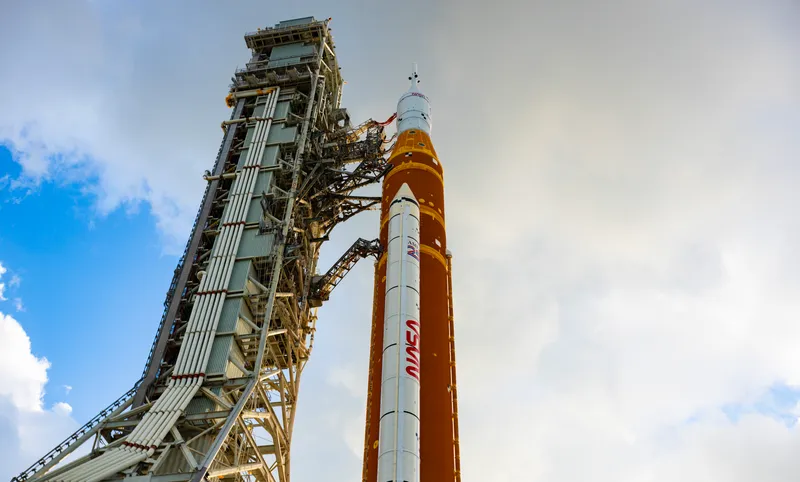
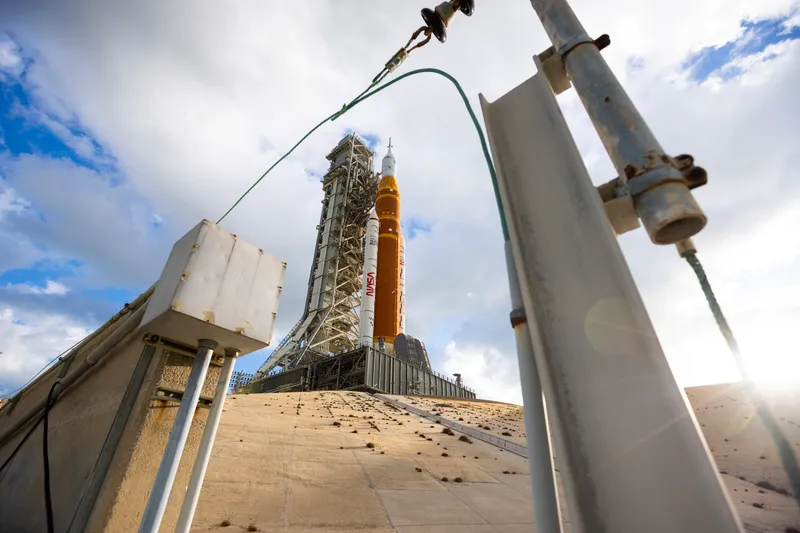
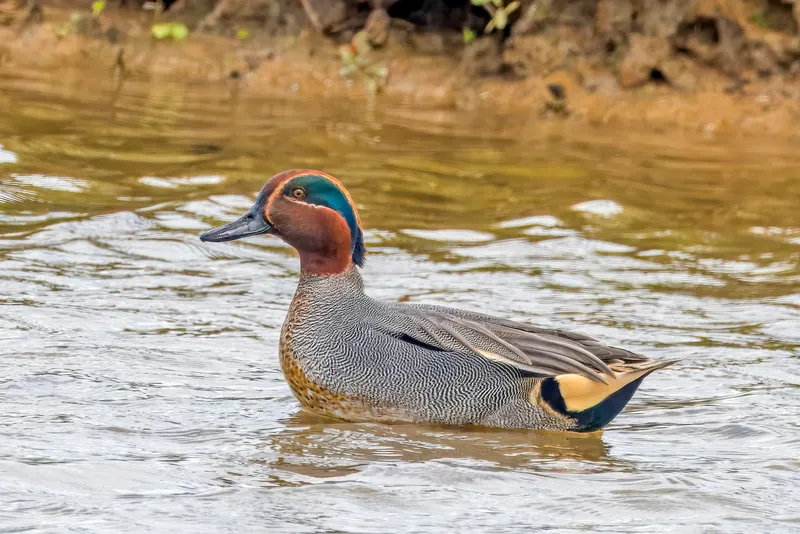

The numbers, and where they come from
Published by the maker
| Sensor size (maker's figure) | 35.9 x 23.9 mm |
|---|---|
| Effective pixels | 32.5 MP |
| Pixel dimensions (3:2) | 6,960 x 4,640 |
| Native ISO range | ISO 100–64,000 |
| Continuous shooting | 40 fps (electronic shutter) |
| Buffer (RAW) | 150 frames (RAW at 40 fps, to CFexpress) |
| Battery (CIPA) | 620 shots |
| Weight with battery and card | 699 g |
| Viewfinder resolution | 3.69 million dots |
Maker figures checked on 25 Sept 2026 — maker's spec sheet. Continuous shooting, in the maker's words: Max. Approx. 12 fps. with Mechanical shutter/1st curtain electronic ... or at 40 FPS with electronic shutter speed maintained for 330 JPEG (CFexpress/SD Card) and 150/140 RAW images (CFexpress/SD Card)
Computed from those figures
| Pixel pitch | 5.16 µm |
|---|---|
| Sensor area | 858 mm² |
| Format factor | 1x |
| Light gathered vs 35mm | the same |
| Print at 300 dpi | 59 cm |
| Diffraction limit | f/7.7 |
Computed from the figures above. Pixel pitch = sensor width / pixel count across. Light gathered = log2 of the area ratio to 36 x 24 mm. Diffraction limit = the aperture at which the Airy disc diameter (2.44 x lambda x N, lambda = 550 nm) reaches two pixel pitches. Other calculators use other thresholds and so quote other numbers.
What owners report
We read 146 public posts and reviews on 24 Oct 2026: reddit.com/r/canon (65), bhphotovideo.com (81). Each point below came up from at least two different people; the wording is ours.
Praised repeatedly
- Owners say the autofocus locks on and stays with the subject. [1][2][3][4]
- Owners single out pre-capture and like being able to put it on one button. [1][2][3][4]
- Owners say the higher resolution gives them more room to crop. [1][2][3][4]
- Owners say high-ISO images in low light come out clean. [1][2][3][4]
- Owners say the files hold detail they can recover in editing, in the shadows and the highlights. [1][2][3][4]
Complained about repeatedly
- Some owners find the menus and settings complex and hard to learn. [1][2][3][4]
- Some owners report the autofocus missing or losing the subject at times. [1][2][3]
- Some owners report the camera overheating, in video and while photographing a wedding. [1][2]
These are public posts. We do not check whether the people who wrote them bought or used this camera.
How this score is put together
9.1 out of 10
- Image quality Weight 25% 8.8
32.5MP full frame, 6960 x 4640, 5.16 µm pitch
- Autofocus Weight 20% 9.3
1053-zone Dual Pixel II
- Video Weight 20% 9.5
7K 60p internal RAW at 6960 x 3672
- Speed Weight 15% 9.2
40 fps electronic, 150 RAW to CFexpress at that rate
- Handling and build Weight 20% 9.0
8.5-stop IBIS centre, CFexpress B plus SD
Scored against full-frame interchangeable-lens cameras. The overall figure is the weighted mean of the rows above — it is computed, not set by hand.
How It Compares
| Spec | Canon R6 III | Sony A7 IV | Nikon Z6 III |
|---|---|---|---|
| Sensor | 32.5MP FF | 33MP FF | 24.5MP FF |
| Video | 7K60 RAW | 4K60 | 6K N-RAW |
| AF Points | 1053 zones | 759 points | 299 points |
| Burst | 40 fps | 10 fps | 20 fps |
| IBIS | 8.5 stops | 5.5 stops | 8 stops |
| Buy | Check price at Amazon | Check price at Amazon | Check price at Amazon |
Lens options
Canon RF 24-70mm f/2.8L IS USM
Canon's L-series f/2.8 standard zoom with optical image stabilisation.
Canon RF 70-200mm f/2.8L IS USM
Canon's L-series f/2.8 telephoto zoom with optical image stabilisation.
Canon RF 50mm f/1.2L USM
Canon's L-series 50 mm f/1.2 prime.
Canon R6 Mark III FAQ
The R6 III has 32.5 MP (6960 x 4640), the R6 II 24.2 MP (6000 x 4000). Both shoot up to 40 fps with the electronic shutter and 12 fps with the mechanical shutter. The R6 III records 7K 60p RAW internally; the R6 II goes up to 4K 60p. Canon rates the in-body stabilisation at 8.5 stops for the R6 III and 8 stops for the R6 II. The R6 III has two card slots: one CFexpress Type B and one SD UHS-II. The R6 II has two SD card slots. The R6 III has a full-size HDMI port (Type A). The R6 II has a micro HDMI port (Type D).
At 6960 x 4640 a 300 dpi print is 59 x 39 cm. At 40 fps with the electronic shutter, Canon rates the buffer at 150 RAW images to a CFexpress card and 140 to an SD card. The 45MP R5 II has 8192 px of width. Owners say the higher resolution gives them more room to crop (see What owners report).
Pre-continuous mode continuously buffers frames, so when you fully press the shutter, the camera also saves the frames captured up to 0.5 seconds before the press (20 frames at 40 fps). Owners single out pre-capture and like being able to put it on one button (see What owners report).
It shoots up to 40 fps with the electronic shutter, has pre-continuous shooting, and records 7K 60p RAW internally with Canon Log 2 and Canon Log 3. For more resolution, Canon's R5 II has 45 MP; the R6 II has 24.2 MP and two SD card slots.
Recommended Accessories
Essential gear to maximize your Canon R6 Mark III experience:
Lexar CFexpress Type B 128GB
A CFexpress Type B card for the R6 III's CFexpress Type B slot; the second slot takes SD UHS-II.
Canon LP-E6P
The battery Canon supplies and recommends. The older LP-E6NH fits, but Canon then disables pre-continuous shooting and HDMI RAW and limits video modes.
DJI RS 3
DJI's three-axis handheld gimbal for mirrorless cameras.
Atomos Ninja V
An Atomos on-camera monitor-recorder for the R6 III's full-size HDMI (Type A) output.
More gear guides: Best TripodsBest Camera BagsBest SD Cards
Final Recommendation
The R6 Mark III pairs a 32.5 MP full-frame sensor with up to 40 fps from the electronic shutter, pre-continuous shooting and internal 7K 60p RAW video.
Buy it if: You want 40 fps with the electronic shutter, internal 7K 60p RAW, and a CFexpress Type B slot next to an SD UHS-II slot in a Canon RF-mount full-frame body.
Skip it if: You need more than 32.5 MP (the R5 II has 45 MP). Some owners find the menus and settings complex and hard to learn (see What owners report).
Compare hybrid options: See our Best Hybrid Camera guide for other photo and video cameras.
