
Pick the System, Not the Body
Fujifilm has the deepest native APS-C lens lineup; Sony wins on cheap third-party glass. You will own lenses far longer than any one camera — choose the mount you can grow into.
The smart sweet spot. APS-C bodies pack 26-40MP sensors, 4K video, and AI autofocus into smaller, lighter, more affordable systems than full-frame — without sacrificing the shot.

Disclosure: As an Amazon Associate I earn from qualifying purchases. Links to retailers on this page are affiliate links. We earn a commission on purchases made through them, at no extra cost to you. It doesn't change our verdicts.
 Best Overall Sony A6700 Check price at Amazon
  Best for Photos Fujifilm X-T5 Check price at Amazon
  Best for Action Canon EOS R7 Check price at Amazon
  Best Value Fujifilm X-S20 Check price at Amazon
  Best for Video Canon EOS R50 V Check price at Amazon
  Best Compact Fujifilm X100VI Check price at Amazon
 | Model | Best For | Megapixels | Video Specs | Price |
|---|---|---|---|---|
| Sony A6700 | Best Overall | 26 MP | 4K120 | Check price at Amazon |
| Fujifilm X-T5 | Best Photo | 40.2 MP | 6.2K30 | Check price at Amazon |
| Canon EOS R7 | Reach / Sports | 32.5 MP | 4K60 (No Crop) | Check price at Amazon |
| Fujifilm X-S20 | Best Value | 26.1 MP | 6.2K Open Gate | Check price at Amazon |
| Sony ZV-E10 II | Creator | 26 MP | 4K60 | Check price at Amazon |
| Canon EOS R50 V | Canon Vlogging | 24.2 MP | 4K30 full width / 4K60 (crop) | Check price at Amazon |
| Nikon Z50 II | Best Entry | 20.9 MP | 4K60 | Check price at Amazon |
| Canon EOS R50 | Beginner | 24.2 MP | 4K30 (No Crop) | Check price at Amazon |
| Fujifilm X100VI | Compact Cult | 40.2 MP | 6.2K Open Gate | Check price at Amazon |
Spec figures from the makers: Sony A6700 (sony.co.uk, checked 25 Sept 2026) · Fujifilm X-T5 (fujifilm-x.com, checked 25 Sept 2026) · Canon EOS R7 (canon-europe.com, checked 25 Sept 2026) · Fujifilm X-S20 (fujifilm-x.com, checked 25 Sept 2026) · Sony ZV-E10 II (helpguide.sony.net, checked 26 Sept 2026) · Canon EOS R50 V (canon-europe.com, checked 16 Oct 2026) · Nikon Z50 II (nikonusa.com, checked 25 Sept 2026) · Canon EOS R50 (canon-europe.com, checked 25 Sept 2026) · Fujifilm X100VI (fujifilm-x.com, checked 25 Sept 2026)
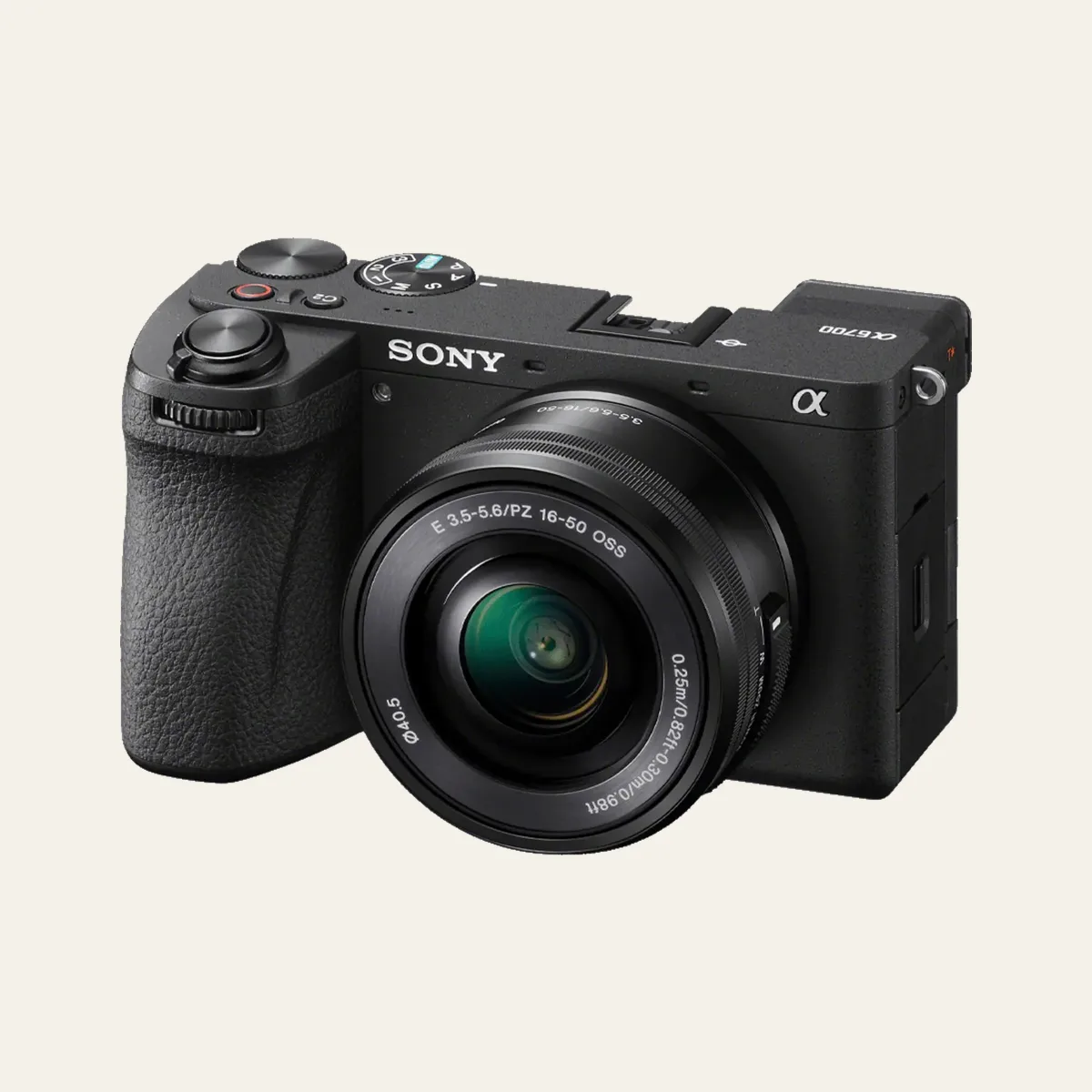
This is the APS-C camera to beat. The A6700 borrows the AI processing unit from Sony's flagship, giving it the best subject-recognition autofocus in the class — it locks onto humans, animals, birds, insects, and vehicles and refuses to let go.
For video it punches far above its price: 4K120 slow-motion, oversampled 4K60, and 10-bit 4:2:2 internal. Add 5-axis IBIS and you have the most complete hybrid body in the format.

If photography comes first, nothing in APS-C touches the X-T5's 40.2MP X-Trans sensor for sheer detail. The dedicated dials for shutter, ISO, and exposure compensation make it a tactile joy, and Fujifilm's Film Simulations deliver gorgeous JPEGs straight out of camera.
It still shoots 6.2K30 and 4K60 video with 10-bit 4:2:2 and F-Log2, plus 7-stop 5-axis IBIS for handheld stills. This is the photographer's APS-C body that doesn't compromise on video.
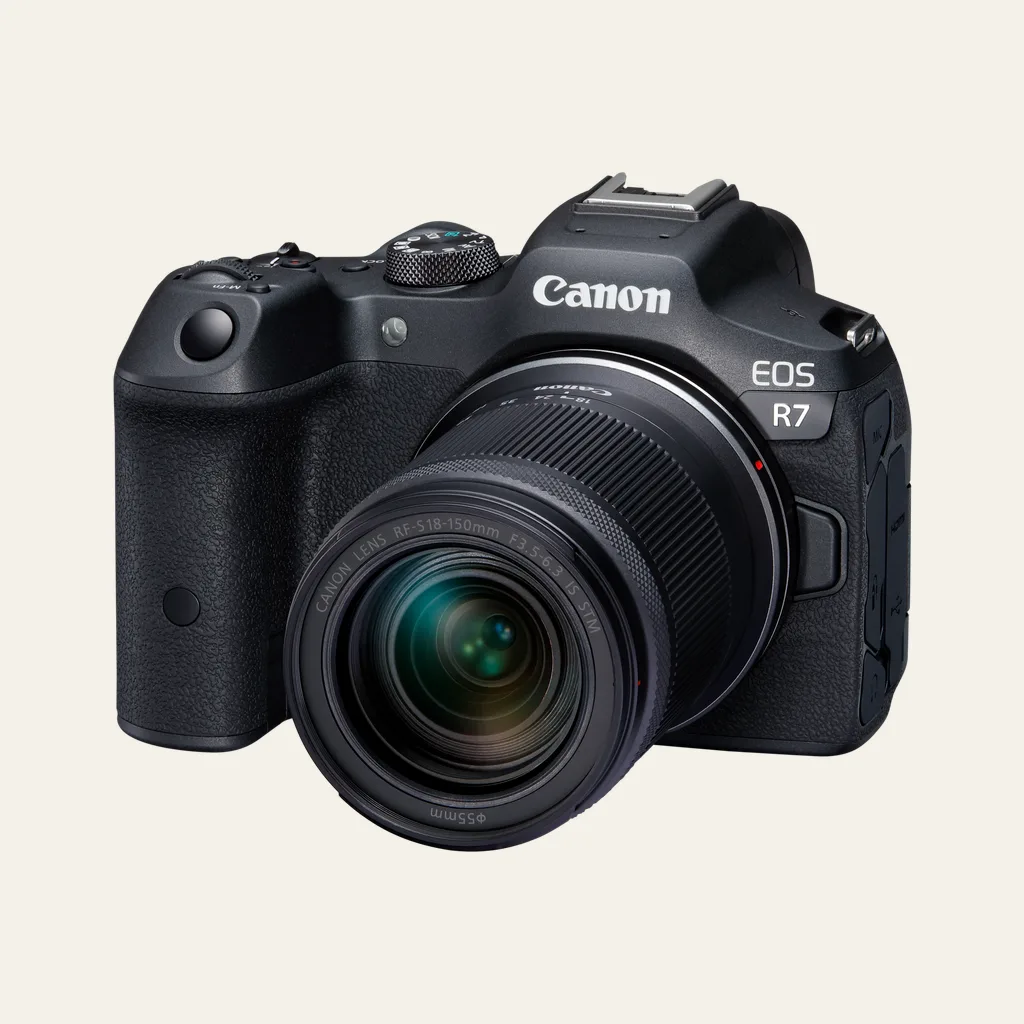
For wildlife and sports, the R7 is a bargain. Its 32.5MP sensor combines high resolution with the 1.6x crop factor to give you serious telephoto reach, and it fires off blistering 30fps electronic bursts to nail the decisive moment.
Canon's excellent Dual Pixel CMOS AF II tracks humans, animals, and vehicles down to -5 EV, and it shoots uncropped 4K60 for video. A deep buffer and dual card slots round out a genuinely capable action body.

The X-S20 is the value champion. It packs a 26.1MP sensor, 5-axis IBIS, and a deep-grip body into a price well below the X-T5 — yet it shoots the same 6.2K Open Gate and 4K60 video with F-Log2 and Fujifilm's full suite of Film Simulations.
A huge battery, fully articulating screen, and a dedicated Vlog mode make it equally happy for YouTube as for travel stills. For most people this is the smartest APS-C buy of 2026.

The R50 V takes the R50's 24.2MP APS-C resolution and points it at video. Canon lists 10-bit 4:2:2 in XF-HEVC S and XF-AVC S, Canon Log 3, full-width 4K at 30p and below oversampled from 6K, a vari-angle screen, and both a microphone input and a headphone output, in a body that weighs 370 g with card and battery.
What it leaves out is just as specific. There is no viewfinder and no in-body stabilization (lens IS or digital IS only), and 4K at 59.94p and 50p is cropped by an amount Canon's spec page does not state. For handheld video, pair it with a stabilized lens such as the RF-S 14-30mm IS STM PZ or the RF-S 18-150mm IS STM. If you want an eye-level finder for stills, the regular R50 has one.

The cult favorite. The X100VI pairs a 40.2MP APS-C sensor with a fixed 23mm f/2 lens (35mm equiv) and a retro hybrid optical/electronic viewfinder. It is the camera you actually carry everywhere because it slips into a jacket pocket.
New for this generation: 5-axis IBIS and 6.2K Open Gate video, making a once photo-only compact a genuine hybrid. If you want one beautiful do-everything street and travel camera, this is it.
Fujifilm has the deepest native APS-C lens lineup; Sony wins on cheap third-party glass. You will own lenses far longer than any one camera — choose the mount you can grow into.
26MP (A6700, X-S20) is the sweet spot for most people. Only step up to the 40MP Fujifilm sensors if you crop heavily or print large — and pair them with sharp, modern lenses.
Absolutely. Modern APS-C bodies like the Sony A6700 and Fujifilm X-T5 deliver 26-40MP sensors, AI subject tracking, 4K60 (or 4K120) video, and in-body stabilization. For everything short of professional low-light work or extreme background blur, APS-C is more than enough — and the smaller, lighter lenses make the whole system easier to carry.
Start with APS-C. You get 90% of the image quality at roughly half the price and weight. The 1.5x (Canon 1.6x) crop also gives you extra reach for wildlife and sports. Full-frame only pulls ahead in very low light and for shallow depth of field — neither of which most beginners need on day one.
For video, the Sony A6700 leads with 4K120 and 10-bit 4:2:2 internal. If you film yourself and can do without a viewfinder and in-body stabilization, the Canon EOS R50 V records 10-bit 4:2:2 with Canon Log 3 in a 370 g body (with card and battery). For photos, the 40.2MP Fujifilm X-T5 captures the most detail in its class, while the Canon R7 wins for fast action with 30fps electronic bursts. The Fujifilm X-S20 is the best all-round value for both.
Fujifilm X-mount has the deepest native APS-C lens lineup, built specifically for the format. Sony E-mount wins on third-party choice (Sigma, Tamron, Viltrox) at lower prices. Canon RF-S and Nikon Z DX are growing but still leaner — though both bodies can mount excellent full-frame glass.

We buy or rent our own equipment. No manufacturer paid for this guide. We earn a commission when you use our affiliate links, which keeps this site ad-free.