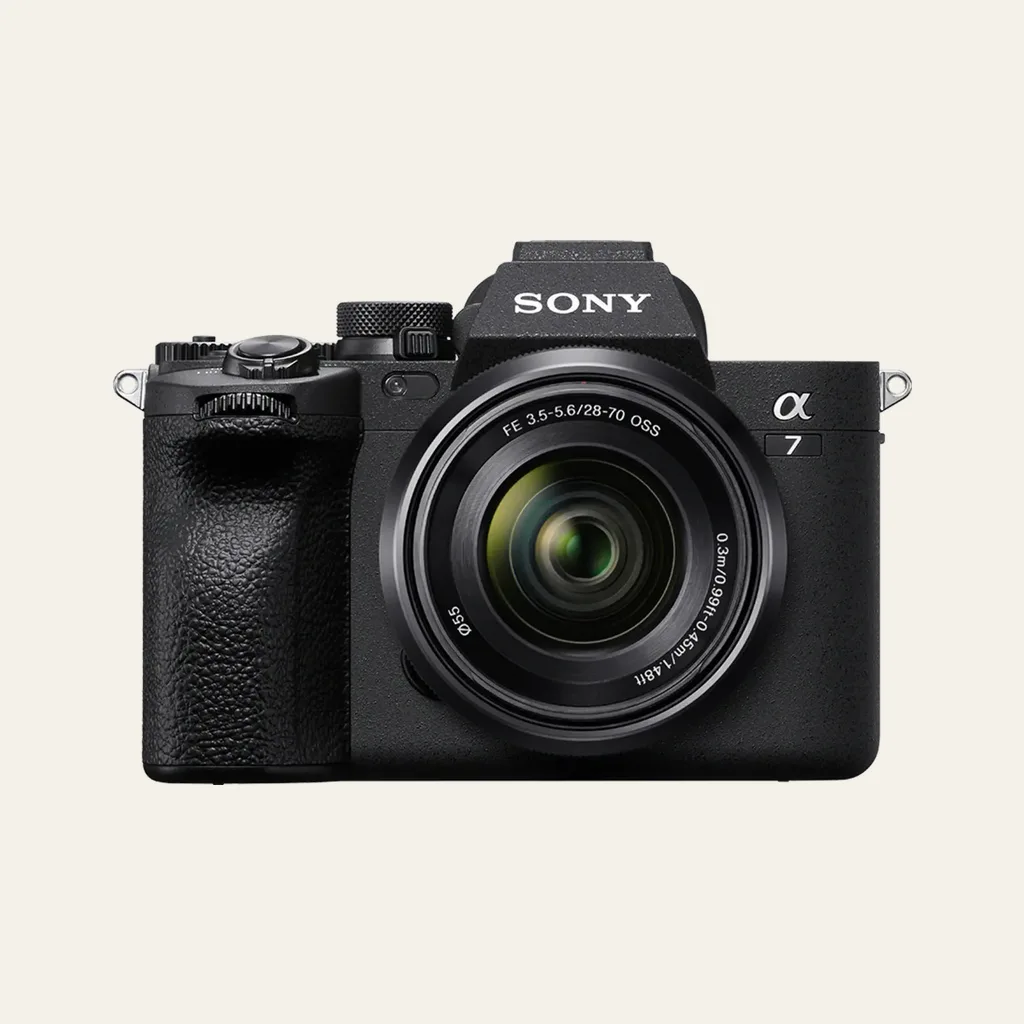
Sony A7 IV
Stay or buy if: You shoot weddings, events, portraits, and hybrid content and don't need 8K or 61MP. The all-rounder that still does almost everything well — for $1,500 less.
One generation apart, $1,500 apart. We compare the workhorse A7 IV against the new flagship A7 V — resolution, 8K video, AI autofocus, and whether the upgrade is worth it for you.
Updated: February 2026
Stay or buy if: You shoot weddings, events, portraits, and hybrid content and don't need 8K or 61MP. The all-rounder that still does almost everything well — for $1,500 less.
Upgrade if: You need maximum resolution for commercial, landscape, or print work, want true 8K, and shoot enough to justify the price. The no-compromise flagship.
| Specification | Sony A7 IV | Sony A7 V |
|---|---|---|
| Sensor | 33MP Full-Frame Exmor R BSI CMOS | 61MP Full-Frame Exmor R BSI CMOS |
| Processor | BIONZ XR | BIONZ XR + AI Processing Unit |
| Video (Max) | 4K60 (S35 1.5x crop), 4K30 full-width | 8K30, 4K60 (1.2x crop), 4K24 no crop |
| Internal Rec | 10-bit 4:2:2 XAVC S-I / XAVC HS | 10-bit 4:2:2 XAVC S-I / XAVC HS |
| Autofocus | 759-point hybrid, Eye AF (Human/Animal/Bird) | 693-point AI Recognition (Human/Animal/Insect/Vehicle) |
| IBIS | 5-axis, 5.5 stops | 5-axis, 8 stops |
| Burst Speed | 10fps | 10fps (mechanical/electronic) |
| ISO Range | 100–51,200 (exp. 50–204,800) | 100–32,000 (exp. 50–102,400) |
| Viewfinder | 3.69M-dot OLED, 0.78x magnification | 9.44M-dot OLED, 0.90x magnification |
| Screen | 3.0" vari-angle, 1.03M-dot | 3.2" 4-axis multi-angle, 2.1M-dot |
| Card Slots | 2x (1x CFexpress A/SD, 1x SD UHS-II) | 2x (CFexpress Type A / SD UHS-II) |
| Battery Life | ~580 shots (LCD) | ~530 shots (LCD) |
| Weight | 658g (with battery and card) | 723g (with battery and card) |
| Price (Body) | ~$2,498 | ~$3,999 |
This is the headline difference of the generation — and the biggest reason to upgrade (or not):
Winner: Sony A7 V — but only if you actually need the resolution. For most shooters, 33MP is more than enough.
The A7 V is the bigger leap here for video-first creators:
Winner: Sony A7 V. True 8K, a smaller 4K60 crop, and better rolling shutter make it the clear video upgrade.
Both have excellent, tenacious autofocus, but the A7 V adds a dedicated AI processing unit:
Winner: Sony A7 V for subject variety and AI tracking, though the A7 IV is still excellent for people and events.
The A7 V refines almost every handling spec:
Winner: Sony A7 V. The 8-stop IBIS and 9.44M-dot EVF are tangible day-to-day upgrades.
Both cameras share Sony's mature E-mount with 100+ native lenses plus affordable third-party glass from Sigma, Tamron, and Samyang. Both use the same NP-FZ100 battery, dual card slots with CFexpress Type A support, full-size HDMI, and a weather-sealed magnesium body. If you already own A7 IV lenses and accessories, they carry straight over to the A7 V — there's no ecosystem switching cost in this upgrade.
Winner: Tie. The shared ecosystem makes upgrading friction-free.
For most photographers: The Sony A7 IV remains the smarter buy. At $1,500 less, it covers weddings, events, portraits, and hybrid video without compromise for the vast majority of shooters.
For resolution and 8K professionals: The Sony A7 V justifies its price with 61MP, true 8K, AI autofocus, 8-stop IBIS, and a class-leading EVF — a genuine flagship leap.
The upgrade verdict: don't pay for 61MP and 8K you won't use. If you do need them, the A7 V is one of the best hybrid cameras you can buy.
This page contains affiliate links. If you purchase through our links, we may earn a small commission at no extra cost to you. This helps support our independent testing.