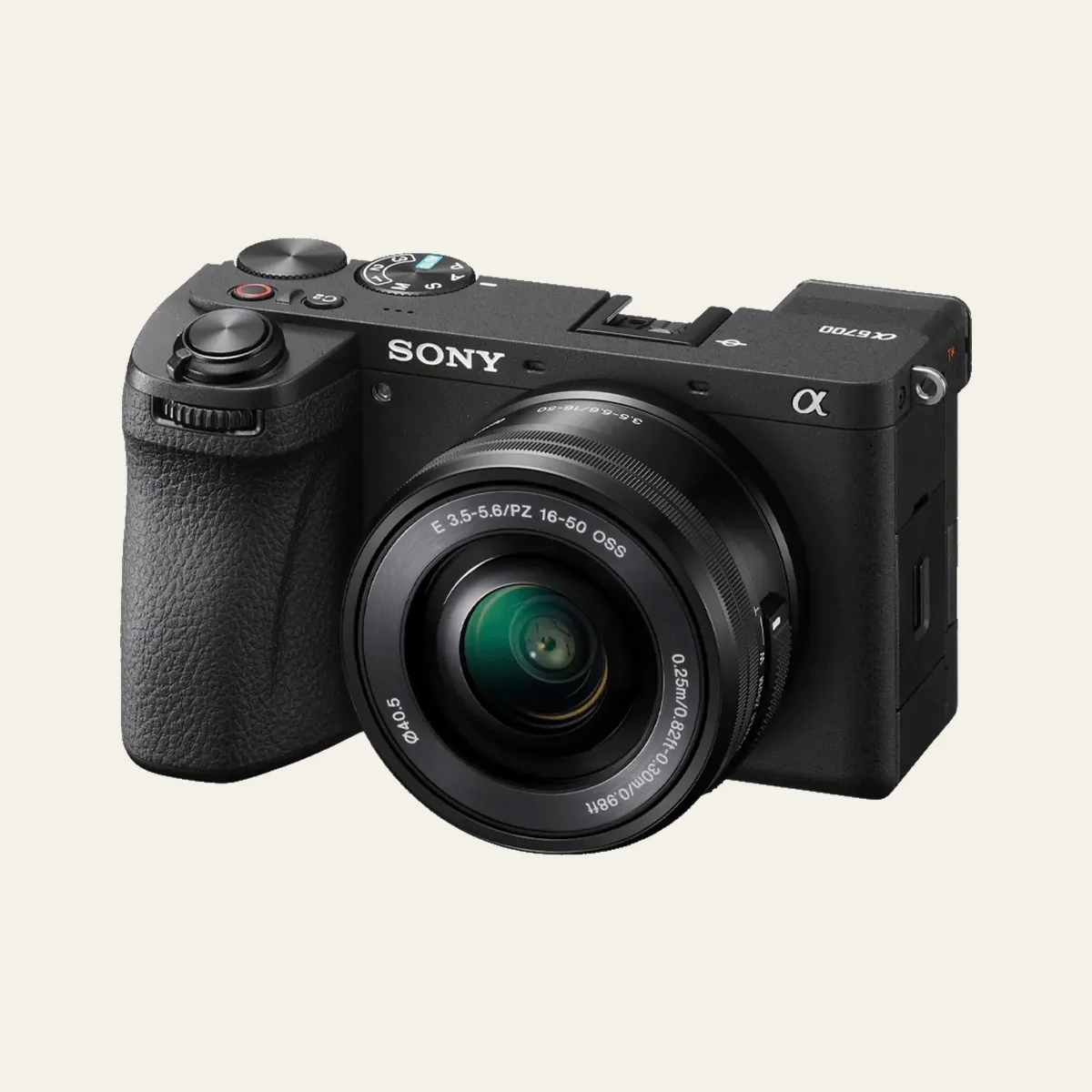
The two definitive APS-C hybrid flagships go head-to-head. We
compare autofocus, video, stabilization, handling, and the value
that decides which one belongs in your bag.
Updated: October 2026
Disclosure: As an Amazon Associate I earn from qualifying purchases. Links to retailers on this page are affiliate links. We earn a commission on purchases made through them, at no extra cost to you. It doesn't change our verdicts.
Quick Verdict
Best for Autofocus & Action
Sony A6700
Choose if: You want the most reliable AI autofocus,
4K120 slow-motion, and weather sealing. Best for
wildlife, sports, and run-and-gun hybrid shooters.
Choose if: You want gorgeous Film Simulation JPEGs,
6.2K Open Gate video, stronger 7-stop IBIS, and the best battery
life. Best for content creators and travel hybrid shooters.
Tracking less tenacious than Sony in erratic motion
8fps mechanical burst is slower for sustained action
Winner: Sony A6700. Its AI autofocus is the most
dependable in this class — a real edge for wildlife and sports.
Video Quality
Both punch well above their weight, but they specialize differently:
Sony A6700
4K60 from a 6K oversample — extremely sharp
4K120 for true high-frame-rate slow motion
10-bit 4:2:2 internal with S-Log3, S-Cinetone, HLG
Continuous 4K60, per Sony: approx. 5 min on [Auto Power OFF Temp.] Standard, 30 min on High (25 °C; XAVC S 150M 8-bit, Wi-Fi off, monitor open, camera off for a while beforehand)
Fujifilm X-S20
6.2K 30p Open Gate from the full sensor
4K60 plus FHD 240p for dramatic slow motion
10-bit 4:2:2 internal with F-Log2 and 19 Film Simulations
20fps burst needs a 1.25x crop
Winner: Tie. Pick the A6700 for 4K120 slow motion; the X-S20 for 6.2K Open Gate and Fuji color.
Stabilization (IBIS)
Fujifilm's 7-stop system has a measurable edge for handheld work:
X-S20: 5-axis IBIS rated at 7.0 stops — confidently
handheld in low light and smoother for walking video
A6700: 5-axis IBIS rated at 5 stops — good, but
you'll reach for a faster shutter or gimbal sooner
Winner: Fujifilm X-S20. More stops means steadier
stills and video without extra gear.
Handling, Reliability & Battery
The bodies make different trade-offs in the field:
Sony A6700
Weather-sealed magnesium-alloy body
Single SD UHS-II slot
Modest ~570-shot battery — carry spares
Fujifilm X-S20
Larger NP-W235 battery rated ~750 shots
Deep grip and dedicated Vlog mode
Single card slot and Micro HDMI; no official weather sealing
Winner: Split decision. The A6700 wins on durability; the X-S20 wins on battery life.
This page contains affiliate links. If you purchase through our links,
we may earn a small commission at no extra cost to you. This helps
support our independent testing.
We use Google Analytics to understand which articles get read. It sets cookies and only runs with your consent. The site itself works either way. Privacy policy